Online search market worldwide - statistics & facts
Online search is experiencing an evolution. Search engines are an integral part of our digital lives, helping to consolidate and organize the vast amount of online information at a fast pace. These tools are not only used by individuals looking for answers and content, but also by companies investing millions in advertising with search providers. For over two decades, Google has dominated the online search market, leaving other competitors struggling to barely match its reach and revenue outside their local markets. However, the industry is poised for its most significant transformation. The AI-powered search trend, pushed chatbots and AI assistants, allowing users to interact with search engines in a conversational format, and is already transforming the way we perform online search and how companies offer this service.
In countries like Germany and France, online users are increasingly choosing privacy- or sustainability-focused alternatives such as DuckDuckGo or Ecosia due to data and privacy concerns. And while domestic competitors like Baidu in China and Naver in South Korea are the tools of choice for its citizens, Yandex surpassed Russia鈥檚 domains and has now the third largest market share among search engines worldwide.
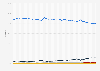
Despite still having a long way to go before shifting the online search industry completely, its success has already taken a toll on Google鈥檚 worldwide lead, which saw its lowest search engine market share on desktops registered in more than a decade. And while Google鈥檚 long-time and biggest competitor Bing surpassed 10 percent of market shares on these devices, more AI applications join a race that is likely to change the paradigm of online searches on every platform.
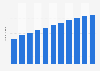
Google made its empire over advertising through its search service, leading a market that generated revenues of over 316.3 billion U.S. dollars in 2024. But as the company saw revenues of Google network websites decrease over the last few years, something already feels different in the kingdom of online search.
As an increasing number of online users employ generative AI for online search, the new capabilities of AI-powered search tools established new standards for the online search experience - thus drawing the first drafts on how search advertising might function in this new realm. For the first time in over twenty years, this market swing has companies who have been providing us with information looking for their answers on how to deal with such changes.
Alternatives to Google
Despite its initial impact, ChatGPT has yet a long way to go to reshape the already complex environment of the online search industry. Google still represents shares of over 90 percent of the search engine market worldwide across all devices, handling over 60 percent of all search queries in the United States and generating over 234.23 billion U.S. dollars in ad revenues from its search engine and YouTube in 2024. But while it remains the top player, alternative search engines still managed to overshadow the tech giant within their local markets.In countries like Germany and France, online users are increasingly choosing privacy- or sustainability-focused alternatives such as DuckDuckGo or Ecosia due to data and privacy concerns. And while domestic competitors like Baidu in China and Naver in South Korea are the tools of choice for its citizens, Yandex surpassed Russia鈥檚 domains and has now the third largest market share among search engines worldwide.
The AI revolution
There is little talk about online searches that do not involve the transformations led by ChatGPT. Reaching more than a million users in only five days, OpenAI鈥檚 chatbot service became the fastest internet service to reach this milestone, being the most popular AI application worldwide.Despite still having a long way to go before shifting the online search industry completely, its success has already taken a toll on Google鈥檚 worldwide lead, which saw its lowest search engine market share on desktops registered in more than a decade. And while Google鈥檚 long-time and biggest competitor Bing surpassed 10 percent of market shares on these devices, more AI applications join a race that is likely to change the paradigm of online searches on every platform.
Google made its empire over advertising through its search service, leading a market that generated revenues of over 316.3 billion U.S. dollars in 2024. But as the company saw revenues of Google network websites decrease over the last few years, something already feels different in the kingdom of online search.
As an increasing number of online users employ generative AI for online search, the new capabilities of AI-powered search tools established new standards for the online search experience - thus drawing the first drafts on how search advertising might function in this new realm. For the first time in over twenty years, this market swing has companies who have been providing us with information looking for their answers on how to deal with such changes.