| Characteristic | Strongly agree/tend to agree | Neither agree nor disagree | Strongly disagree/tend to disagree |
|---|---|---|---|
| - | - | - | - |
| - | - | - | - |
| - | - | - | - |
| - | - | - | - |
| - | - | - | - |
| - | - | - | - |
| - | - | - | - |
| - | - | - | - |
| - | - | - | - |
| - | - | - | - |
| - | - | - | - |
| - | - | - | - |
| - | - | - | - |
| - | - | - | - |
| - | - | - | - |
| - | - | - | - |
| - | - | - | - |
The chart is not accessible to screen readers. Please switch to the table view to access the data.
August 2021
Worldwide
June 2021
18 years and older
"do not know" responses excluded from the chart
Online interview
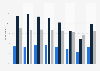
Original question: "To what extent, if at all, do you agree or disagree with the following statement: When I open a website and it asks me about cookies, I always click 'accept all'"
The source provides the following information about the survey methodology:
"The data is based on the interviews of adults aged 18 and over in 17 markets with sample sizes varying between 509 and 2005 for each market. All interviews were conducted online in June 2021. Data from each market uses a nationally representative sample apart from Mexico and India, which use urban representative samples, and Indonesia and Hong Kong, which use online representative samples."