| Characteristic | Ideation and planning | Proof of concept | Pilot | Full deployment | Discontinued | Not started |
|---|---|---|---|---|---|---|
| - | - | - | - | - | - | - |
| - | - | - | - | - | - | - |
| - | - | - | - | - | - | - |
| - | - | - | - | - | - | - |
| - | - | - | - | - | - | - |
| - | - | - | - | - | - | - |
| - | - | - | - | - | - | - |
| - | - | - | - | - | - | - |
| - | - | - | - | - | - | - |
| - | - | - | - | - | - | - |
| - | - | - | - | - | - | - |
The chart is not accessible to screen readers. Please switch to the table view to access the data.
McKinsey & Company
July 2025
Worldwide
H2 2024
44 respondents
18 years and older
Senior executives at financial institutions worldwide; Institutions included "megabanks", "super-regional" banks, "core regional" banks, along with insurance companies/brokers and development banks.
The source does not clarify the survey method used.
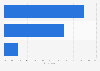
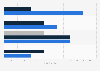
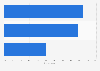
The question was phrased by the source as follows: "Which gen AI use cases are your institution currently implementing in commercial credit, and what are their development stages? (multiple choice)".
Megabanks were defined as institutions holding more than 1,000 billion U.S. dollars in assets. Super-regional banks were those with assets between 500 billion and 1,000 billion U.S. dollars, while core regional banks had between 100 billion and 500 billion U.S. dollars. The 鈥渙ther鈥� category included institutions such as insurance companies, brokers, and development banks.