| Characteristic | Simple | Moderate | Advanced |
|---|---|---|---|
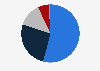
| 2020 | 42.9% | 40.4% | 16.7% |
| 2021 | 34.4% | 39.7% | 25.9% |
| 2022 | 33.4% | 15.4% | 51.2% |
| 2023 | 39.6% | 12.4% | 48.1% |
| 2024 | 45% | 11% | 44% |
The chart is not accessible to screen readers. Please switch to the table view to access the data.
April 2025
Worldwide
2020 to 2024
Data regarding earlier periods than 2023 were taken from previous reports. The source defines the sophiscation level of bad bots as:聽
" 鈥� SIMPLE Connecting from a single, ISP-assigned IP address, this type connects to sites using automated scripts, not browsers, and doesn鈥檛 self-report (masquerade) as being a browser.
鈥� MODERATE Being more complex, this type uses 鈥渉eadless browser鈥� software hat simulates browser technology鈥攊ncluding the ability to execute JavaScript.
鈥� SOPHISTICATED Producing mouse movements and clicks that fool even sophisticated detection methods, these bad bots mimic human behavior and are the most evasive. They use browser automation software, or malware installed within real browsers, to connect to sites.
鈥� ADVANCED PERSISTENT BOTS (APBs) APBs are a combination of moderate and sophisticated bad bots. They tend to cycle through random IP addresses, enter through anonymous proxies and peer-to-peer networks, and are able to change their user agents. They use a mix of technologies and methods to evade detection while maintaining persistence on target sites."