Artificial intelligence (AI) use in travel and tourism - statistics & facts
Artificial intelligence (AI) is no longer just a future bet for the travel and tourism sector; it is a top priority. Companies and customers are accelerating the pace of innovation as they continue to unveil AI's potential. All eyes are now on the deployment of AI agents, whose promise to autonomously perform tasks such as booking hotel rooms and flights could mark the most significant shift in the online travel market since the advent of the internet.
How do travel and tourism companies use AI?
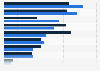
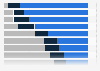
In a 2025 global study among relevant firms on the most common business areas where travel and logistics companies use artificial intelligence, nearly half of the respondents mentioned service operations, and over one-third said they regularly implemented AI for knowledge management. While these figures suggest that AI tools are already impacting some business functions, adoption of AI agents is still in its early stages. That year, less than 10 percent of travel and logistics companies surveyed worldwide said that their use of AI agents had reached the scaling phase. That said, this scenario could change quickly. In a 2025 survey, as many as four out of 10 global hotel chains answered that they planned to implement AI agents.
What are the biggest AI partnerships in travel and tourism?
Travel and tourism companies have front-row seats to the AI revolution. In late 2025, OpenAI unveiled plans to integrate third-party apps into conversations in ChatGPT. Two of the few partners involved in the pilot were Booking.com and Expedia, the flagship brands of Booking Holdings and Expedia Group, respectively. Through this partnership, ChatGPT users could now get travel-related results by activating the Booking.com and Expedia apps directly in the conversation without leaving the chat. Meanwhile, Tripadvisor, announced as part of the second group of partners to join OpenAI鈥檚 app project, also signed a partnership with聽ChatGPT鈥檚 competitor Perplexity AI.
How do travelers use AI?
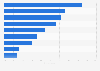
Travelers see in artificial intelligence a tool that could help them plan a vacation more tailored to their specific needs. In a 2025 global study, generating trip itineraries ranked as the main use of AI-powered features among travelers. However, the usage of AI tools for travel purposes can vary drastically across different regions. In a country breakdown on the use of AI for travel inspiration in 2025, over 80 percent of Chinese consumers mentioned to have used artificial intelligence for this reason. In contrast, less than 30 percent of respondents from key European travel markets like France and Germany said the same.
The next major challenge for travel and tourism companies is to tackle regional needs and remove the main barriers to AI adoption 鈥� a process already reshaping the way we travel.聽