Travel and tourism trends 2026 - statistics & facts
What are the main trends shaping the travel and tourism market? The sector is undergoing a profound transformation, with 2026 expected to be a pivotal year for the implementation of artificial intelligence (AI) 迟辞辞濒蝉,听AI agents, and the advancement of solutions like biometric technologies that aim to make each journey more seamless. Meanwhile, interest in experiential travel, driven by major live events and recent developments among leading companies focusing on tours, activities, and attractions, shows no signs of slowing down.
The ABC of travel tech trends for 2026: Agents, Biometrics, and Chatbots
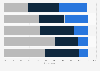
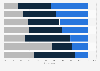
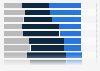
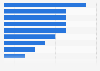
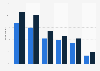
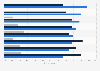
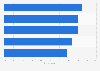
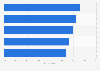
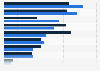
Everyone in travel and tourism is talking about AI agents, and with good reason. Three years after artificial intelligence surged in popularity, the implementation of AI systems that can autonomously perform tasks, such as booking a hotel room or a flight, would be a game changer. While there is little doubt that AI agents will be one of the most talked-about trends in 2026, the travel and tourism sector is still in its early stages of experimenting with these tools. In a 2025 survey, less than 10 percent of travel and logistics companies said that AI agent use for functions like marketing and sales or product development had reached the scaling phase. Although only around one out of 10 surveyed hotel chains reported using AI agents that year, 40 percent already planned to implement them, suggesting that adoption of this technology could increase quickly. Other tech solutions expected to drive impact in 2026 include biometrics and chatbots. In a 2025 global survey, over two-thirds of travelers said they would consider using biometric gateways, though interest varied significantly across regions. Meanwhile, chatbots and virtual assistants ranked as the main business areas where hotel chains were currently using AI.
Experiential travel trends for 2026: from stadiums to spas
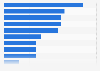
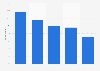
The era of experiential travel has just begun, as travelers are increasingly prioritizing unique experiences over consumer goods. In 2026, sporting events will be at the forefront of the global experience market, with the FIFA World Cup projected to contribute significantly to tourism in North America. Tourists who will attend the soccer tournament across the United States, Canada, and Mexico are anticipated to spend nearly 7.5 billion U.S. dollars, generating over half of the total forecast expenditure linked to the event. Aside from the influence of sports events on travel, wellness is also set to play a key role, as spa services topped a ranking of the leading travel experiences among global consumers in a 2025 study.
Companies to watch in 2026
With interest in travel experiences at its highest, it is no wonder that many of the companies that have recently made headlines operate in this market. In late 2025, one of the leading online travel agencies focusing on experiences, Klook, filed for an initial public offering (IPO) in the United States. While Expedia plans to expand its offering of travel experiences through the acquisition of Tiqets, Tripadvisor has confirmed its intention to merge its core brand with Viator, the company鈥檚 platform focusing on tours and attractions. Beyond experiential travel, business travel giant American Express Global Business Travel and corporate travel management firm Navan are companies worth keeping an eye on, with the former reportedly considering a sale and the latter having recently completed its IPO.
Overall, despite all the trends that are transforming the way both companies and consumers think about and experience travel, there is one important aspect that will likely stay the same: people鈥檚 interest in traveling remains as high as ever, with global travel and tourism revenue forecast to grow steadily in the years ahead.聽