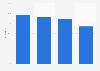
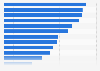
| Characteristic | Score on a scale from 1 to 100 |
|---|---|
| - | - |
| - | - |
| - | - |
| - | - |
| - | - |
| - | - |
| - | - |
| - | - |
| - | - |
| - | - |
The chart is not accessible to screen readers. Please switch to the table view to access the data.
July 2022
Worldwide
April and May 2022
5,647 respondents
The survey was carried out in 11 markets (Brazil, China, France, Germany, Italy, Japan, Middle East, South Korea, Spain, United Kingdom, United States). In each of the markets, it gathered responses of a minimum of 500 qualified luxury consumers. The consumers were Vogue and GQ readers who had purchased luxury products valued at 500 U.S. dollars or more in the last 12 months, with 80 percent spending at least two thousand or more annually.
The source analyzed the following 60 top luxury brands analyzed based on revenue: Acne Studios, Alexander McQueen, Alexander Wang, Balenciaga, Bally, Balmain, Bosideng, Bottega Veneta, Brunello Cucinelli, Burberry, Canada Goose, Carolina Herrera, Celine, Chanel, Chlo茅, Coach, Comme des Gar莽ons, Dior, Dolce & Gabbana, Dries van Noten, Ermenegildo Zegna, Etro, Fendi, Giorgio Armani, Givenchy, Gucci, Herm猫s, Hugo Boss, Isabel Marant, Jimmy Choo, Kate Spade, Kenzo, Loewe, Longchamp, Loro Piana, Louis Vuitton, Maison Margiela, Marc Jacobs, Marni, Max Mara, Michael Kors, Miu Miu, Moncler, Moschino, Mulberry, Off-White, Paul Smith, Prada, Ralph Lauren, Rick Owens, Saint Laurent, Salvatore Ferragamo, Stella McCartney, Supreme, Tod鈥檚, Tom Ford, Tommy Hilfiger, Tory Burch, Valentino, and Versace.