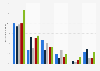
Mobile devices connected to the internet are vulnerable to targeted attacks and security threats. In December 2025, the number of global mobile cyberattacks was approximately *** million, continuing the downward trend observed since the end of 2020, after experiencing an annual peak of almost *** million in October 2020.
Mobile concerns: Smishing
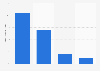
While mobile operating systems come with vulnerabilities requiring patching and regular maintenance, watchful usage can reduce the risk for users of incurring security threats. Smishing attacks are especially reliant on users’ accidental mistakes or naivety. Smishing, or SMS phishing, uses text messages to lure users into accessing fake websites requesting personal data, or into clicking on malicious download links that could infect the device with malware. In the first quarter of 2024, AdWare and RiskTool were the most encountered types of mobile malware worldwide, while Trojan malware accounted for ** percent of the total. Smishing attacks do not interest regular users alone, but can also target organizations and professionals. In 2023, it was found that the share of IT professionals and organizations targeted by smishing attacks was at 75 percent.
Mobile app privacy
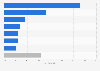
According to a survey of global consumers carried out in August 2021, both Android and iOS users appeared equally keen to stop using an app if their privacy expectations were not met. Mobile apps have to collect different types of data for functionality purposes, including app diagnostic and device data for location-based services. However, mobile apps also collect other types of more personal user data, such as search history, browsing history, health data, and financial information. The data can be then used by the company that collected them in the first place (1st party data), or with entities that do not have a direct relationship with the users, and obtain data from the main tracking source (3rd party data). Social media apps, like other app categories, rely on acquiring 3rd party data from users for their advertisement business. As of February 2022, TikTok was found to have the highest number of potential 3rd party trackers, followed by Telegram, and Twitter.
Profit from the additional features of your individual account
Currently, you are using a shared account. To use individual functions (e.g., mark statistics as favourites, set
statistic alerts) please log in with your personal account.
If you are an admin, please authenticate by logging in again.
Learn more about how ÌÇÐÄÆÆ½â°æ can support your business.
Securelist. (March 4, 2026). Number of mobile cyberattacks against users worldwide from January 2020 to December 2025 [Graph]. In ÌÇÐÄÆÆ½â°æ. Retrieved July 15, 2026, from /statistics/1305965/mobile-users-cyber-attacks/
Securelist. "Number of mobile cyberattacks against users worldwide from January 2020 to December 2025." Chart. March 4, 2026. ÌÇÐÄÆÆ½â°æ. Accessed July 15, 2026. /statistics/1305965/mobile-users-cyber-attacks/
Securelist. (2026). Number of mobile cyberattacks against users worldwide from January 2020 to December 2025. ÌÇÐÄÆÆ½â°æ. ÌÇÐÄÆÆ½â°æ Inc.. Accessed: July 15, 2026. /statistics/1305965/mobile-users-cyber-attacks/
Securelist. "Number of Mobile Cyberattacks against Users Worldwide from January 2020 to December 2025." ÌÇÐÄÆÆ½â°æ, ÌÇÐÄÆÆ½â°æ Inc., 4 Mar 2026, /statistics/1305965/mobile-users-cyber-attacks/
Securelist, Number of mobile cyberattacks against users worldwide from January 2020 to December 2025 ÌÇÐÄÆÆ½â°æ, /statistics/1305965/mobile-users-cyber-attacks/ (last visited July 15, 2026)
Number of mobile cyberattacks against users worldwide from January 2020 to December 2025 [Graph], Securelist, March 4, 2026. [Online]. Available: /statistics/1305965/mobile-users-cyber-attacks/