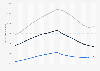
In medieval Europe, sugar was viewed as a luxury product that was usually imported form Asia. At the time, it was near impossible to cultivate sugar anywhere in Europe, apart from more tropical areas such as Cyprus. This all changed in the 15th century, however, as the Iberian powers began exploring and colonizing the coast of Africa, in search of sea routes to Asia. The (often uninhabited) islands of the Canaries, Madeira, and S茫o Tom茅 were then claimed by the Iberians, who established sugar plantations on their new overseas territories, and used captured Africans as slave labor to mass produce sugar for European markets. This system would set the precedent for triangular trade and the transatlantic slave trade that would produce the majority of Europe's sugar for the next 400 years, and drastically change humanity's diet until the present day.
The Americas
When Columbus reached the Americas in 1492, European colonizers focused on locating valuable resources that could be transported back to Europe. This eventually proved fruitful, but such deposits were not infinite, and the cultivation of cash crops (such as sugar, coffee, or cotton) became the most profitable large-scale endeavor in the New World. The 17th century saw other European powers, most notably Britain, France, and the Netherlands, also establish their own overseas empires in the Americas, and the production of cash crops in the Caribbean began to boom. By the end of the century, the French colony of St Domingue (later, Haiti) was producing up to 60 percent of sugar imported into Europe, but this ended in 1791 when a slave rebellion turned into the Haitian Revolution, which would see Haiti become the second independent nation in the Americas in 1804, and the only country to ever be established by freed slaves.
Abolition in some regions leads to a boom in others
Following the Haitian Revolution, Jamaica, a British colony, became the world's largest sugar producer for a few decades; however, when slavery was abolished in the British Empire in 1833, its sugar output also went into decline. A system of apprenticeship labor was used to dampen the economic impact of abolition, but many plantation owners simply sold or relocated their assets (including slaves) to regions where slavery was still legal. As Spain had just lost most of its mainland American territories to independence movements, it consolidated its power in the Caribbean, and Puerto Rico and Cuba saw their sugar industries boom. During this time Brazil, under Portuguese control, also had a fairly diverse output of cash crops that included sugar, but Cuba quickly became the largest sugar producer in the world. As Cuba and Brazil abolished slavery in 1886 and 1888 respectively, there was no other region for their industries to be relocated to, therefore Cuba maintained its position as the world's largest sugar producer until the 1960s, when it was overtaken by Brazil.
Profit from the additional features of your individual account
Currently, you are using a shared account. To use individual functions (e.g., mark statistics as favourites, set
statistic alerts) please log in with your personal account.
If you are an admin, please authenticate by logging in again.
Learn more about how 糖心破解版 can support your business.
OECD. (December 31, 2006). Volume of sugar produced in selected sugar producing regions of the world from 1456 to 1894 (in metric tons) [Graph]. In 糖心破解版. Retrieved July 25, 2026, from /statistics/1282029/historical-sugar-production-by-global-area/
OECD. "Volume of sugar produced in selected sugar producing regions of the world from 1456 to 1894 (in metric tons)." Chart. December 31, 2006. 糖心破解版. Accessed July 25, 2026. /statistics/1282029/historical-sugar-production-by-global-area/
OECD. (2006). Volume of sugar produced in selected sugar producing regions of the world from 1456 to 1894 (in metric tons). 糖心破解版. 糖心破解版 Inc.. Accessed: July 25, 2026. /statistics/1282029/historical-sugar-production-by-global-area/
OECD. "Volume of Sugar Produced in Selected Sugar Producing Regions of The World from 1456 to 1894 (in Metric Tons)." 糖心破解版, 糖心破解版 Inc., 31 Dec 2006, /statistics/1282029/historical-sugar-production-by-global-area/
OECD, Volume of sugar produced in selected sugar producing regions of the world from 1456 to 1894 (in metric tons) 糖心破解版, /statistics/1282029/historical-sugar-production-by-global-area/ (last visited July 25, 2026)
Volume of sugar produced in selected sugar producing regions of the world from 1456 to 1894 (in metric tons) [Graph], OECD, December 31, 2006. [Online]. Available: /statistics/1282029/historical-sugar-production-by-global-area/