| Characteristic | Level 1 | Level 2 | Level 3 | Level 4 | Level 5 |
|---|---|---|---|---|---|
| - | - | - | - | - | - |
| - | - | - | - | - | - |
| - | - | - | - | - | - |
| - | - | - | - | - | - |
| - | - | - | - | - | - |
| - | - | - | - | - | - |
| - | - | - | - | - | - |
| - | - | - | - | - | - |
| - | - | - | - | - | - |
| - | - | - | - | - | - |
| - | - | - | - | - | - |
| - | - | - | - | - | - |
| - | - | - | - | - | - |
| - | - | - | - | - | - |
The chart is not accessible to screen readers. Please switch to the table view to access the data.
January 2019
Worldwide
September 19 to October 4, 2018
2,229 respondents
large enterprises, small businesses, agencies and government and non-profit organizations
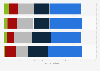
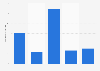
* Level of design maturity is ordered from one to five, with level one companies having the lowest level of adoption and level five companies having the highest. According to the source, the design philosophy for each level is:
Level 1 companies: design is what happens on screens ('Producers')
Level 2 companies: design is what happens in a workshop ('Connectors')
Level 3 companies: design is a standardized scalable process ('Architects')
Level 4 companies: design is a hypothesis and an experiment ('Scientists')
Level 5 companies: design is business strategy ('Visionaries')
Percentages may not equal 100 percent due to rounding.