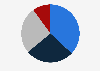
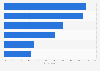
| Characteristic | Completely agree | Agree/mostly agree* | Mostly agree | Somewhat agree/hardly agree* | Hardly agree | Disagree | No answer |
|---|---|---|---|---|---|---|---|
| - | - | - | - | - | - | - | - |
| - | - | - | - | - | - | - | - |
| - | - | - | - | - | - | - | - |
| - | - | - | - | - | - | - | - |
| - | - | - | - | - | - | - | - |
Download
Source
Source
Release date
November 2021
More information
Region
Germany
Survey time period
2017 to 2021
Age group
14 years and older
Special properties
German-speaking population
Method of interview
Computer-assisted personal interviews (CAPI)
Supplementary notes
* Change in survey: from 2019 onwards 鈥瀉gree鈥� and 鈥渕ostly agree鈥� were combined, as well as 鈥渟omewhat agree鈥� and 鈥渉ardly agree鈥�.
Information on population:
Base: German-speaking population aged 14 years and older.
Information on total sample:
2017: 23,106 respondents, representing 70.09 million people
2018: 23,086 respondents, representing 70.45 million people
2019: 23,120 respondents, representing 70.6 million people
2020: 23,138 respondents, representing 70.63 million people
2021: 23,299 respondents, representing 70.54 million people.
The figures displayed refer to the following reports:
2017: VuMA 2018; 2018: VuMA 2019; 2019: VuMA 2020; 2020: VuMA 2021; 2021: VuMA 2022
Further information on the methodology is available and in the .
Figures were rounded for better understanding of the statistic.
Citation formats