Agentic artificial intelligence (AI) in finance - statistics & facts
Agentic artificial intelligence (AI) systems that plan, decide, and act across multi-step workflows without continuous human instruction have been advancing at an accelerated pace in financial services than in almost any other sector. This is driven by the industry's vast data assets, existing digital infrastructure, and persistent pressure to reduce operational expenses. As of early 2026, over half of financial services institutions were in the early stages of actively adopting agentic AI.
Deployment patterns reveal a fintech-led divide
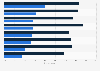
A gap between stated ambition and operational reality when implementing agentic AI was notable across the industry, particularly in the banking sector. While interest in agentic AI deployment was widespread, only 16 percent of banking executives reported actively deploying use cases. The vast majority of the industry's activity was concentrated in experimentation rather than execution, with 52 percent at the stage of piloting agentic AI in banking. A broader look across financial services as a whole reveals a related but distinct pattern. Institution type was a clear differentiator when adopting AI-related systems. With 57 percent of fintechs having reached active adoption of agentic AI or beyond, compared to 45 percent of traditional financial institutions. Suggesting that agentic AI is not simply a technology adoption race but a test of organizational readiness, made more difficult for firms with complex infrastructure and governance structures.
Governance gaps will define which institutions scale
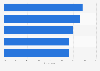
The barriers to scaling agentic AI in financial services run deeper than technology alone. Among firms using or assessing AI agents, the most frequently cited obstacle was performance and reliability. A shortage of internal skills to manage or monitor AI agents effectively was ranked as the second most challenging barrier to using AI agents. Views in the banking sector aligned with the wider industry outlook. The vast majority of executives cited managing governance, risk, and compliance as a top concern. While 58 percent pointed to a lack of technology skills and capabilities, and 54 percent cited poor data quality and integration as a major hurdle when creating value from agentic AI in banking.
The primary issue to be addressed by financial firms was the readiness of organizations to govern, validate, and sustain autonomous systems at scale. That challenge was reflected in the level of agentic AI maturity seen throughout different firm types. Nine percent of financial regulatory institutions had achieved agentic AI maturity as of early 2026, compared to 30 percent of financial services industry respondents. This divergence may underline the impact a firm's framework and governance can have on how fast an individual business can adapt to industry changes and technological advancements.
Future forecast
The current wave of agentic AI pilot activity is likely to give way to broad industry-wide deployment as the decade progresses. Agentic AI has been forecast to record the largest adoption jump of any AI category as of 2026. With 57 percent more financial service institutions anticipating agentic AI maturity by 2030, on top of the 24 percent already there. Looking beyond financial service-specific firms, the financial department of companies across various industries has the steepest anticipated agentic AI growth trajectory. Firm executives expect that the finance function will climb from 20 percent meaningful agentic AI application in 2025 to 66 percent by 2030.
As institutions accumulate operational experience and oversight bodies develop clearer guidance on accountability and model risk, compliance is likely to shift from a constraint on adoption to a foundation for it. Narrowing the gap between regulated institutions and the fintechs currently leading deployment. For financial services firms, the strategic question is no longer whether to deploy agentic AI, but how quickly they can build the organizational readiness to do so safely and at scale.