Vaccination in the United States - Statistics & Facts
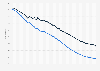
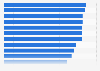
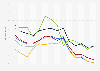
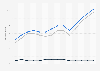
Measles cases in the United States climbed to 2,276 in 2025, the highest annual total since 1992, marking a resurgence of a disease once brought under control through routine vaccination. This increase reflects a broader shift: vaccination coverage has declined across most childhood immunization programs in recent years. Among kindergarteners, coverage for both the measles, mumps, and rubella (MMR) and polio vaccines fell to 92.5 percent in the 2024/25 school year, the lowest levels recorded since 2011 and below the level typically needed to prevent measles outbreaks.
Vaccines have sharply reduced the burden of infectious disease
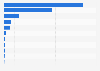
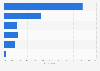
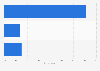
Routine vaccination has dramatically reduced the burden of infectious disease in the United States. Before vaccines were introduced, measles caused an estimated 530,217 cases annually; by 2022, reported cases had fallen to just 121. Polio cases declined from 16,316 annually to one. Influenza vaccination alone prevented an estimated 3.1 million illnesses among people aged five to 17 during the 2023/24 season, contributing to nearly 9.8 million cases prevented across all age groups. These gains illustrate the scale of protection vaccines continue to provide, even as coverage begins to slip.
Divided views on vaccine safety and policy
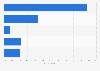
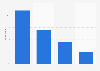
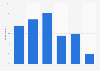
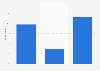
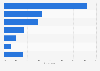
Public opinion on vaccination in the United States is mixed and increasingly divided along political lines. As of February 2025, 62 percent of Democrats viewed vaccines as very safe, compared to 36 percent of Independents and 21 percent of Republicans. The divide extends to perceptions of risk. In April 2025, 89 percent of Democrats said the benefits of childhood vaccines outweigh the risks, compared with 67 percent of Republicans and 60 percent of Independents. Views on vaccine policy are similarly split. As of March 2026, 41 percent of adults supported reducing the number of vaccines received in the United States, while 29 percent opposed such a reduction.
Non-medical exemptions have nearly doubled since 2020
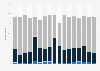
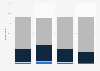
As vaccination coverage has declined, exemptions have risen. The share of kindergarteners with at least one vaccine exemption reached 3.6 percent in 2024/25, more than double the 1.6 percent recorded in 2011/12. Non-medical exemptions, which cover religious and personal objections, accounted for 3.4 percent of kindergarteners, while medical exemptions held steady at 0.2 percent. Exemptions have increased each year since 2020, with non-medical exemptions driving most of the rise.
Taken together, the data points to a vaccination system under growing strain. As recent measles cases in the U.S. show, maintaining high vaccination coverage remains essential to preventing the return of diseases already largely contained in the country.