Cosmetics industry - statistics & facts
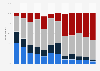
The beauty and personal care market has been a powerhouse of growth and innovation over the last few years, with self-care and wellness becoming more and more important to consumers worldwide. Despite a small setback in 2020, the global cosmetics market has experienced an almost incessant growth since 2004 and was forecast to generate revenues amounting to nearly 140 billion U.S. dollars by the year 2030.
Skincare dominates the beauty market
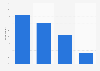
The beauty industry is characterized by a wide range of trends. Every day new products or new brands pop up, and some are here to stay. In recent years, skincare has become the main interest of beauty aficionados, and the 鈥渟kinification鈥� trend is proof of that. This consists of combining skincare with other treatments or personal care products, such as hair care or make-up items. It comes as no surprise that skincare was the most popular beauty product category in 2024, holding a market share of nearly 40 percent. Skincare is predicted to stay number one, bringing in roughly 236 billion U.S. dollars in revenues by 2030. It is thus easy to imagine that, in the near future, skin benefits will be imperative for almost every cosmetic product on the market.
Industry leaders
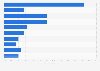
The production of cosmetics and beauty products is controlled by several multi-national corporations 鈥� 尝'翱谤茅补濒, Unilever, Procter & Gamble Co., The Estee Lauder Companies, Shiseido Company, and Beiersdorf to name a few. As of 2024, the French cosmetics company聽尝'翱谤茅补濒 was the leading beauty manufacturer in the world, generating revenues of over 44 billion U.S. dollars that year. The company owns the leading personal care brand worldwide, 尝'翱谤茅补濒 Paris, valued at over 35 billion U.S. dollars in 2025.聽
The influence of social media
The cosmetics industry has benefited from the increasing popularity of social media channels such as Instagram and YouTube. These platforms are not only highly influential amongst certain demographic groups but also create a demand for beauty products and help fill the gap between cosmetics brands and consumers. In January 2025, Sandra Cires Art was the most subscribed beauty content creator on the video platform YouTube with about 16.6 million subscribers to her channel. However, social media are now more than influencers talking to their audience while trying on or promoting cosmetics: with social commerce, it is now possible to purchase beauty items directly on social media apps like TikTok, mostly through live sales.
Outlook: what is in store for the cosmetics industry?
One of the key topics making headlines at the end of 2025 was the beauty industry's growth slowing down compared to the explosive development between 2022 and 2024. This was driven by economic uncertainty and more conscious consumer spending, as well as other factors, including a slowdown in China, which impacted global sales, especially in the prestige sector. However, retail sales for prestige products in the United States聽reached a peak that same year, while the Indian and Middle Eastern markets emerged as rising stars in that sector. Several consumers worldwide are not yet willing to give up on their skin care routines, beauty treatments, or color cosmetics products.聽
As technological advancements and beauty tech keep on pushing the boundaries of this market, and shoppers ask for increasingly more efficient products, the beauty industry is still poised to remain one of the most relevant and impactful.