Wine industry in Australia - statistics & facts
Australia ranks sixth globally in wine production, trailing behind the traditional鈥痺ine-producing countries鈥痮f Italy, France, and Spain. The country boasts 65 wine regions, including South Australia鈥檚 Barossa Valley, Riverina in New South Wales, and Victoria鈥檚 Yarra Valley. For many years, Australian wine regions have been recognized among the best worldwide, and grape growing in vineyards plays a significant role in the country鈥檚 agriculture industry. Nonetheless, the Australian wine industry has been dealt several blows in recent years, from tariffs imposed by China, a profitable export destination, to weather conditions affecting grape growing.
Reclaiming the crown as China鈥檚 leading wine trade partner, further expansion into other lucrative markets, and responding to rising demand for alcohol-free alternatives could be the solution to emptying some of Australia鈥檚 wine bottles and replenishing the wine sector鈥檚 glass.
Who is Australia鈥檚 largest wine producer?
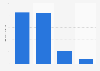
With two valuable Australian alcohol brands under its belt, Penfolds and Beringer, Treasury Wine Estates is Australia鈥檚 largest wine producer, selling over 21 million nine-liter cases of wine worldwide in 2025. Treasury Wine Estates recently reported one of its highest revenues in the past ten years, with a net sale revenue of almost three billion Australian dollars. Casella Family Brands, famed for its Yellow Tail wines adorned with a kangaroo, and Australian Wine Holdco Limited (AWL), owner of Accolade Wines and the recent acquirer of Pernod Ricard鈥檚 Australian wine portfolio, also make their mark.What wine varieties are produced in Australia?
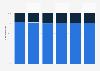
In 2025, Australia recorded a slight increase in its wine grape crush compared to the previous year, though the crush was still below the long-term average.鈥疭outh Australia retained its position as the largest contributor to the national wine grape crush. The Shiraz variety held the title of Australia鈥檚 leading wine-making grape variety, with the Chardonnay white wine variety coming in second. Other popular varieties include Cabernet Sauvignon, Pinot Gris, and Merlot.Will Australia鈥檚 wine exports stand still or sparkle?
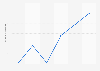
Following China鈥檚 removal of tariffs on Australian bottled wine in March 2024, Australia鈥檚 wine exports have stabilized. As a historically key trade partner, China鈥檚 re-entry has provided some relief to Australia鈥檚 wine producers. The value of wine exported to mainland China skyrocketed from about 8.1 million Australian dollars in 2023 to over 890 million in 2025. The leading destination for wine exports in terms of volume was the United Kingdom. Despite the revival of trade, Australia鈥檚 wine exports are far from reaching the peak volume achieved in 2018.How have consumer appetites for wine changed?
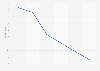
Swimming in wine inventory surpluses, an estimated 2.2 billion liters worth in 2023, Australia has observed depressing shelf prices created by reduced exports and falling global wine consumption levels. In Australia, the consumption volume of wine has continued to decline, reflecting changing tastes of consumers, particularly younger generations. Cost-of-living pressure and increasing health-consciousness may have also had an impact on wine consumption.Reclaiming the crown as China鈥檚 leading wine trade partner, further expansion into other lucrative markets, and responding to rising demand for alcohol-free alternatives could be the solution to emptying some of Australia鈥檚 wine bottles and replenishing the wine sector鈥檚 glass.