| Characteristic | Score |
|---|---|
| - | - |
| - | - |
| - | - |
| - | - |
| - | - |
| - | - |
| - | - |
| - | - |
| - | - |
| - | - |
| - | - |
| - | - |
| - | - |
| - | - |
| - | - |
| - | - |
| - | - |
| - | - |
| - | - |
| - | - |
| - | - |
| - | - |
| - | - |
| - | - |
| - | - |
| - | - |
| - | - |
| - | - |
| - | - |
| - | - |
| - | - |
The chart is not accessible to screen readers. Please switch to the table view to access the data.
Download
Source
Source
Release date
November 2021
More information
Region
Latin America and the Caribbean
Survey time period
2020
Special properties
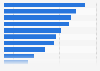
the higher the score, the more a country enables financial secrecy
Supplementary notes
Financial secrecy scores are evaluated across 20 indicators, each composed of several sub-indicators that look at the presence or absence of specific laws and policies, as well as specific combinations of laws and policies, that enable financial secrecy. The more a country鈥檚 laws and policies program a country鈥檚 tax and financial systems to facilitate the hiding of private finances, the higher a financial secrecy score the country gets.
Citation formats