Global housing market - statistics & facts
The global housing markets witnessed considerable pressure in the last years, with rising prices and arguably shrinking supply creating affordability tensions. The World Economic Forum (WEF), however, points out that the current challenge is not a global housing shortage but rather a mismatch between supply, demand, affordability, and access. In many advanced countries, the gap between household incomes and property values has widened notably over the last decade, while soaring mortgage rates have curbed mortgage borrowing. These factors are evidently delaying or excluding younger generations and lower-income households from homeownership.
Homeownership or renting?
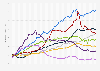
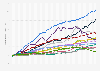
A considerable divergence can be noticed in global real estate markets, with home values rising faster than rents in major cities between 2015 and 2025. The trend was seen in major global cities with some outliers like Madrid, which experienced the largest jump in rents globally, driven by tourism, and New York with declines in both home and rent prices. Miami showed the highest increase in real home prices since 2015. Homeowners are, however, happier as compared to tenants as revealed by a survey conducted across 30 countries. In countries with stronger rights for tenants, the gap in satisfaction is smaller.
聽Global housing market amid economic pressures
Global economic pressures continually shape housing markets, with changing interest rates, global investment flows, and construction costs influencing rents and prices in local markets.
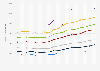
Home sales in the United States have plummeted since 2021, with 2023 falling below the levels recorded during the subprime mortgage crisis (2007 to 2010). Affordability challenges extend beyond the United States. In the second half of 2022, advanced economies saw nominal house prices decline for the first time following a nearly 12-year period of uninterrupted growth. Although the downward trend quickly reversed for nominal prices, real property prices plateaued in 2023. That reveals a stagnation in the market as homebuyers grapple with rising living costs and stricter lending.
While the advanced economies registered around a percent increase in house prices, these gains were offset by falls in the emerging market economies in the first half of 2025. Real house prices remained around 20 percent above post-global financial crisis levels worldwide.
Will U.S. tariff tremors shake the housing market?
In addition to the interplay of various factors such as interest rates, buyer sentiment, inventory and regulations impacting the housing market, another significant force was at play in 2025: tariffs. The U.S. government鈥檚 shift in trade policy with a more aggressive stance on tariffs on imported goods further rattled an already stalled housing market. Tariffs levied upon building materials such as lumber, steel, aluminum, and copper are expected to drive up the new home construction costs in the country. Higher material costs further make projects such as low-margin affordable housing financially unattractive. The ripple effect of the tariffs on other countries might be seen in the coming year.
Outlook for 2026
Real estate markets around the world have been cooling in recent years, with high mortgage rates and unaffordable prices dampening demand. Several markets have undergone corrections following the post-pandemic surge in prices. While Toronto and Hong Kong have seen their housing bubble risks decline since 2024, the bubble risks in cities such as Miami and Tokyo continued to rise in 2025. Experts anticipate modest increases in home prices rather than sharp surges in 2026, which is expected to be a year of relative balance after many volatile cycles.聽