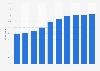
| Characteristic | Share of respondents |
|---|---|
| Reports in the media about fake news | 48% |
| Checking the presented facts or information | 45% |
| Hints from other users or friends | 19% |
| Verifying the author or publisher of the information | 14% |
| Verifying the imprint | 14% |
| Asking other users or friends | 13% |
| Reviewing the URL / links provided by the source | 12% |
| Information has been flagged as fake | 7% |
| Examination of accompanying photos or videos | 6% |
| Miscellaneous | 7% |
| None of the above | 11% |
The chart is not accessible to screen readers. Please switch to the table view to access the data.
Loading statistic...
Download
Source
Sources
Release date
June 2017
More information
Region
Germany
Survey time period
May 4-19, 2017
Number of respondents
1,011 respondents who use the internet for personal use
Age group
14 years and older
Special properties
Base: respondents who have noticed fake news or false information in the internet
Method of interview
Computer-assisted web interviews (CAWI)
Supplementary notes
The source provides no information of the precise phrasing of the question used in the survey. The formulation chosen here may therefore vary slightly from the one used in the actual survey. Multiple answers were possible.
Citation formats