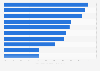
| Characteristic | Share of population |
|---|---|
| - | - |
| - | - |
| - | - |
| - | - |
| - | - |
| - | - |
| - | - |
| - | - |
| - | - |
| - | - |
| - | - |
The chart is not accessible to screen readers. Please switch to the table view to access the data.
February 2016
Philippines
2005 to 2015
Improved sanitation refers to facilities which include flush or pour-flush toilet or latrine to: piped sewerage, septic tank or pit; a ventilated improved pit (VIP) latrine; a pit latrine with slab; or a composting toilet or latrine.
Aggregation: MDG aggregation and imputation methods, with weighted averages using total population as a weight.
Source: MDG Indicators Database. Countries report data to the WHO/UNICEF Joint Monitoring Programme for Water Supply and Sanitation (JMP). The primary data sources used in international monitoring include nationally representative household surveys, including Multiple Indicator Cluster Surveys (MICS), Demographic Health Surveys (DHS), World Health Surveys (WHS), Living Standards and Measurement Surveys (LSMS), Core Welfare Indicator Questionnaires (CWIQ), Pan Arab Project for Family Health Surveys (PAPFAM) and population censuses. Such data are entered into the JMP database after validation with objective criteria.