Iran conflict and its 2026 escalation - statistics and facts
On February 28, 2026, a joint military operation between Israel and the United States launched an attack on Iran, marking a significant escalation in a confrontation that had been building for months. The United States government said the offensive was intended to curb Iran鈥檚 nuclear ambitions and noted that it might also present an opportunity for wider political change within the country.
This escalation follows months of heightened tensions that included widespread anti-government protests inside Iran, multiple rounds of indirect U.S.-Iran nuclear negotiations, a June 2025 exchange of air strikes between Israel and Iran, and a massive U.S. military buildup in the region. Diplomatic efforts between Tehran and Washington aimed at resolving the dispute over Iran鈥檚 nuclear program had shown progress in February 2026 but ultimately failed to prevent the current hostilities. The situation remains fluid, with considerable geopolitical and humanitarian implications for the broader Middle East region.
The precedent to the 2026 escalation - the Twelve-Day War
To put Iran鈥檚 role in the Middle East in context, it is essential to look at both the Islamic Republic鈥檚 domestic politics and its foreign policy. Iran鈥檚 role in the聽Middle Eastern conflict has so far been considered that of an indirect participant. The regime in Tehran has been known to finance militant groups in the Middle East that are identified as destabilizers in the region. Apart from Hezbollah in Lebanon and the Houthis in Yemen, the Iranian regime also supports Hamas, the direct opponent of Israel in the ongoing war in Gaza. Arguing that Iran was on the verge of being able to produce nuclear weapons, the Israeli military launched attacks on Iran on June 13, 2025, prompting retaliation from Iran. During the 12 days of missile strikes, there were civilian casualties in both countries. The complexity of the conflict increased when the United States joined with Israel and attacked nuclear sites in Iran. In response, Iran targeted U.S. military airbases in Qatar. On June 24, 2025, the United States brokered a truce between Iran and Israel.
Global impact of the 2025-2026 Iran conflict
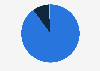
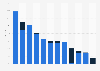
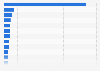
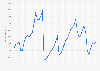
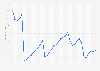
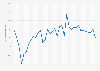
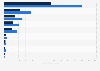
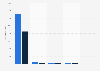
The conflict is bound to impact global crude oil prices. A major maritime transit route for oil and other commodities is the Strait of Hormuz, one of the global maritime choke points located between Iran and Oman. In 2024, 34.6 percent of the Middle Eastern crude oil was exported through this strait. Due to the ongoing conflict, Iran has closed the Strait of Hormuz to seaborne traffic. This closure influences all global markets, including China and Europe, the main importers of crude oil worldwide.
Political turmoil dating back to 1977
The 1977鈥�79 revolution in Iran began as a broad popular uprising against the Shah鈥檚 authoritarian, Western-oriented regime, which many Iranians experienced as oppressive. After the Shia cleric, Ayatollah Khomeini, returned from exile in 1979, the Shah was overthrown and an Islamic theocracy was established, bringing new restrictions, especially for women and minorities.
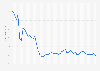
Although presidential elections in Iran are held every four years since then, the choice of candidates is limited as they are pre-vetted by the clerical guidance council. According to Freedom House, which ranks the political freedom of countries, Iran is considered not free in terms of political and civil rights. The restriction and oppression by the current regime in Iran, especially of women, has caused many internal protests, as well as calls for a regime change in Iran, both from within and outside the country. With the reported killing of Khomeini and several top government officials in the 2026 attack, the country is now facing political and civilian uncertainty.
Iran's foreign relations
Since the revolution in 1979, Iran's foreign relations to the Western world have been difficult. It begun with the breakdown of Iran-US relations amid the 444-days-long hostage crisis of U.S. embassy staff in Tehran. It impeded further with the Iran-Iraq war from 1980 to 1988. It was all followed up by decades of economic sanctions in an attempt to limit Iran鈥檚 nuclear program.
Iran鈥檚 ties with governments and non-state actors across the Middle East are often pragmatic, shifting with the region鈥檚 evolving risks and opportunities. Its regional role remains a point of contention, particularly over its links to armed groups and repeated allegations of Iran-backed cyber operations targeting other MENA states.听
The February 2026 military escalation and the closure of the Strait of Hormuz demonstrate how decades of unresolved tensions rooted in Iran's 1979 revolution, strained foreign relations, and disputes over its nuclear program continue to carry consequences that extend far beyond the region's borders. Whether through renewed diplomacy or further conflict, the outcome will shape not only the future of Iran and the Middle East but also global energy markets and international security for years to come.听