Aviation emissions worldwide - statistics & facts
The air transportation sector is responsible for around three percent of global greenhouse gas emissions. It is also one of the fastest growing sources of GHGs, and now faces pressure to reduce its substantial climate impact. But as one of the so-called 鈥渉ard-to-abate鈥� sectors, and with more and more people now taking to the skies, the industry must overcome many challenges to make air travel less carbon intensive.
If left unaddressed, it is forecast that aviation鈥檚 share of global emissions will rise in the coming decades as other historically polluting sectors reduce fossil fuel reliance at a faster pace. As such, the adoption of low-carbon fuels and other sustainable solutions will need to grow far more rapidly if the aviation industry is to achieve its ambitions of net-zero flying by 2050.
Global aviation emissions are sky-high
Global emissions from air transportation grew nearly eight percent year-on-year in 2024, to 882 MtCO鈧�. While this is slightly below the record high set in 2019, aviation emissions have surged by roughly 70 percent since 2020 and are likely to exceed pre-pandemic levels in 2025. International flights accounted for around 60 percent of global aviation emissions in 2024, having produced nearly 550 MtCO鈧�. Emissions from international flights have more than doubled since 1990, owing to the increasing demand for overseas travel over the past decades.Where are aviation emissions highest?
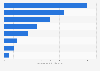
The United States is the biggest contributor to global aviation emissions, by far. In 2023, emissions from U.S. passenger and freight flights neared 225 MtCO鈧�, more than double the emissions of the second-largest aviation polluter, China. Despite having a far lower population than the U.S. and China, the UK was the third-largest contributor to aviation emissions in 2024, with 34 MtCO鈧�. The majority of these emissions came from London Heathrow, which has one of the highest carbon footprints of any international airport. Together, aviation鈥檚 10 largest polluters were responsible for 60 percent of global air transportation emissions in 2024.Inequalities in flight emissions
Flying is one of the most carbon intensive activities one can undertake, but the carbon intensity of flights varies greatly by the length and class of the trip. For example, long-haul flights average around 200 g CO鈧�/pkm for those in economy class, but the carbon footprint of those in first class for the same journey is roughly four times greater. Meanwhile, the carbon intensity of private jets averages some 1,300 g CO鈧�/pkm. The United States is the biggest contributor to global emissions from private jets, with flights departing from the North American country emitting 10 MtCO鈧俥 in 2024. The flying habits of the super-rich have been under increasing scrutiny in recent years due to their unbalanced environmental impacts.Decarbonizing air travel
The aviation sector is still heavily dependent on fossil fuels. This, along with ever-increasing passenger demand, has offset any progress made in improving carbon intensity through efficiency improvements from design and technology. With flight demand set to continue rising, the use of Sustainable Aviation Fuels (SAFs) is considered one of the most important strategies for decarbonizing aviation and is projected to account for around 65 percent of the sector鈥檚 emissions reductions by mid-century. But while volumes are increasing, SAFs production is currently far below the levels needed to meet the demands for net-zero goals. It is estimated that the aviation industry requires investments of five trillion U.S. dollars by mid-century to develop and implement various low-emissions technologies, SAFs, and infrastructure in a net-zero by 2050 scenario.If left unaddressed, it is forecast that aviation鈥檚 share of global emissions will rise in the coming decades as other historically polluting sectors reduce fossil fuel reliance at a faster pace. As such, the adoption of low-carbon fuels and other sustainable solutions will need to grow far more rapidly if the aviation industry is to achieve its ambitions of net-zero flying by 2050.