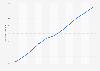
| Characteristic | Occupancy days in millions |
|---|---|
| - | - |
| - | - |
| - | - |
| - | - |
| - | - |
| - | - |
| - | - |
| - | - |
| - | - |
| - | - |
| - | - |
| - | - |
| - | - |
| - | - |
| - | - |
| - | - |
| - | - |
| - | - |
| - | - |
| - | - |
| - | - |
| - | - |
| - | - |
| - | - |
| - | - |
| - | - |
| - | - |
| - | - |
| - | - |
| - | - |
| - | - |
| - | - |
The chart is not accessible to screen readers. Please switch to the table view to access the data.
Download
Source
Source
Release date
October 2024
More information
Region
Germany
Survey time period
1992 to 2023
Supplementary notes
According to the source, the figure for 2005 is an adjusted value in so far as (single) numbers of healthy newborns have been included.
According to the source, the average length of stay is defined as follows: "The length of stay is the number of days that a patient has spent in inpatient treatment on average. It arises from calculated days, inpatient days and the number of cases for each field or department."
Citation formats