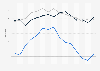
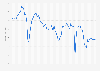
| Characteristic | Economic expectation | Income expectation | Willingness-to-buy |
|---|---|---|---|
| - | - | - | - |
| - | - | - | - |
| - | - | - | - |
| - | - | - | - |
| - | - | - | - |
| - | - | - | - |
| - | - | - | - |
| - | - | - | - |
| - | - | - | - |
| - | - | - | - |
| - | - | - | - |
| - | - | - | - |
| - | - | - | - |
| - | - | - | - |
| - | - | - | - |
The chart is not accessible to screen readers. Please switch to the table view to access the data.
April 2016
United Kingdom
October 2014 to December 2015
2,000 respondents
The findings of the 鈥淕fK Consumer Climate MAXX survey鈥� based on around 2,000 interviews conducted each month on a representative sample of the United Kingdom's population. This survey tool is subject to continuous quality controls, especially in relation to the representativeness. The fact that the results are used and recognized in the field of empirical legal research (for example, the likelihood of confusion between products) is a testament to the exceptionally high quality of this survey. This means that the results are quality approved by experts and must stand up in court.
The consumer climate explicitly refers to all private consumer spending. However, depending on the definition, only 30 percent of private consumer spending is accounted for retail. The remainder is attributable to services, travel, rent, health services and the entire personal care segment.
Willingness to buy is a mood indicator, as are all the other indicators. It examines whether consumers think it is advisable to make major purchases at present. Even if they answer "yes", two further requirements need to be fulfilled for a purchase to be made: consumers must have the money that is required for such a major purchase and also regard this acquisition to be necessary. In addition, it only relates to consumer durables, which require a greater budget.
Further Information: Rolf B眉rkl, tel. +49 911 395-3056, konsumklima@gfk.com.