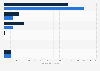
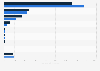
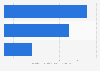
| Characteristic | Number of batteries |
|---|---|
| - | - |
| - | - |
| - | - |
| - | - |
| - | - |
| - | - |
| - | - |
| - | - |
| - | - |
| - | - |
| - | - |
| - | - |
| - | - |
The chart is not accessible to screen readers. Please switch to the table view to access the data.
Download
Source
Source
Release date
November 2018
More information
Region
EU
Survey time period
2018
Supplementary notes
The source gives the following information on methodology: "Batteries are assumed to reach end of life after 8 years, then becoming available for recycling. In this study, lifespans were considered to be distributed discretely [...] In the EU, up to 90 % of BEV are assumed to be collected, while the PHEV collection rate is assumed to be 50 %. The possibilities of battery re-use are ruled out in the present analysis. The number of batteries available for recycling is estimated based on the average number of batteries deployed in each of the IEA scenarios discussed before. EV batteries deployed in the EU represent an average of the high and low ERTRAC scenarios."
Citation formats