Huge crowds of protesters hit the streets across the United States on Saturday under the motto 鈥淣o Kings鈥�, decrying U.S. President Donald Trump鈥檚 policies. Demonstrations were seen in cities such as New York, Washington, D.C., Atlanta, Chicago and Los Angeles, with many holding banners with slogans such as 鈥淭he Constitution is not optional鈥� and 鈥淩esist Fascism鈥�. Republicans have called the protests the 鈥淗ate America鈥� rallies.
Protesters are demonstrating against the expanding reach of Trump鈥檚 policies since the start of his second term in office, stating that he is acting more like a monarch than a president. More specifically, they condemned the recent immigration raids, deployments of National Guard troops to cities against several governors鈥� wishes, budget cuts and government layoffs, as well as what they described as attacks on the media and his political opposition.
Trump has dismissed the accusations and responded to the weekend鈥檚 crowds by reposting an AI-generated video on social media on Saturday night of him wearing a crown and flying a fighter plane that drops sludge on demonstrators below. On Sunday, Trump told reporters that he is not a king. 鈥淭he demonstrations were very small, very ineffective, and the people were whacked out,鈥� he said. 鈥淲hen you look at those people, they are not representative of the people of our country.鈥�
On the eve of the protests, YouGov nearly 10,000 Americans on the topic. The polling company found that many people are dissatisfied with how democracy in the country is currently working: only three in 10 U.S. adults (31 percent) said they are satisfied with the status quo today.
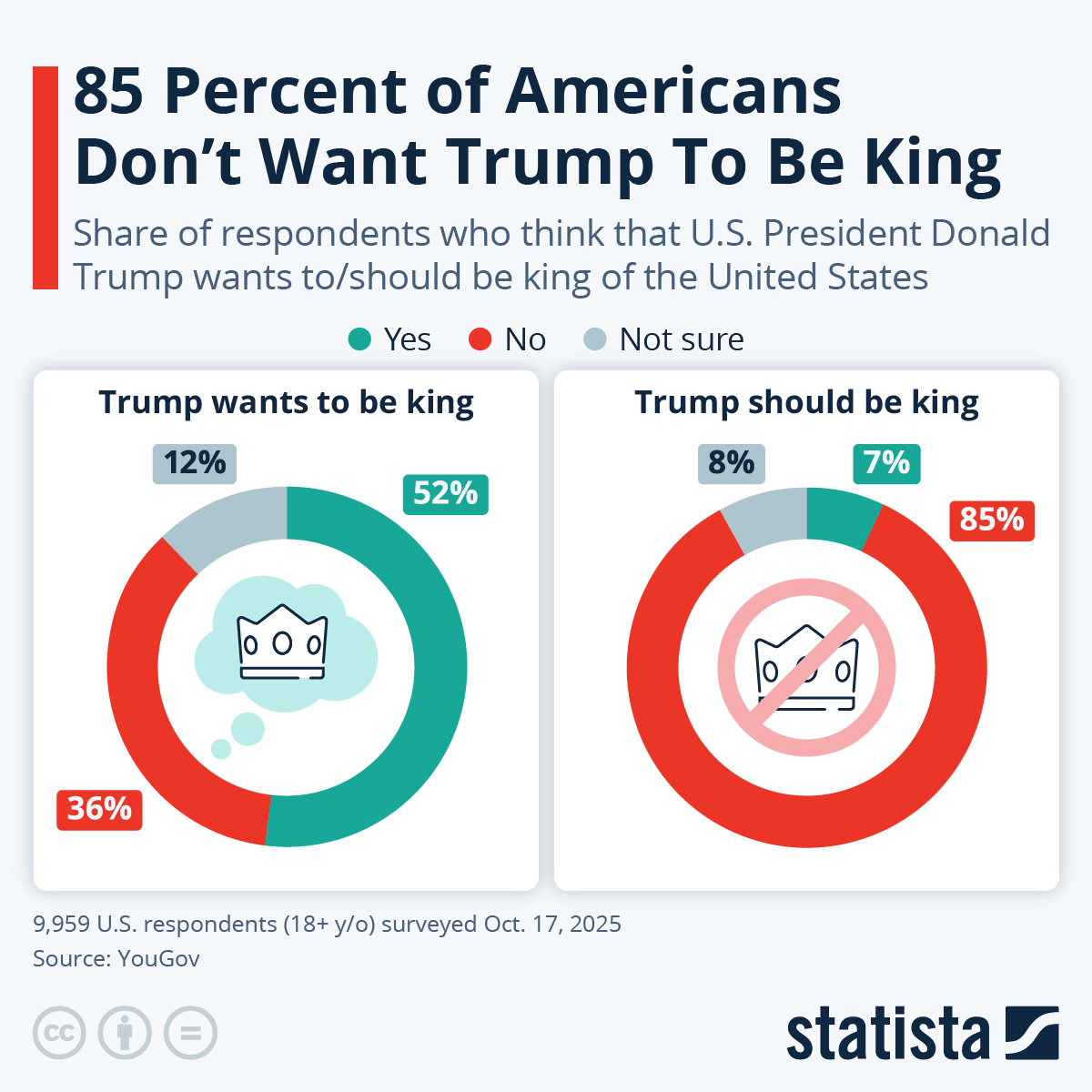
At the same time, 52 percent of respondents said they thought Trump wanted to be king of the U.S., compared to 36 percent who disagreed. This was split starkly along partisan lines, with 84 percent of Democrats saying they believe he does want to have a more monarchical role, while 55 percent of Independents said the same and 19 percent of Republicans also agreed. When asked whether Trump should be king, there was greater consensus: 85 percent said no, as just seven percent said yes and eight percent said they were unsure.