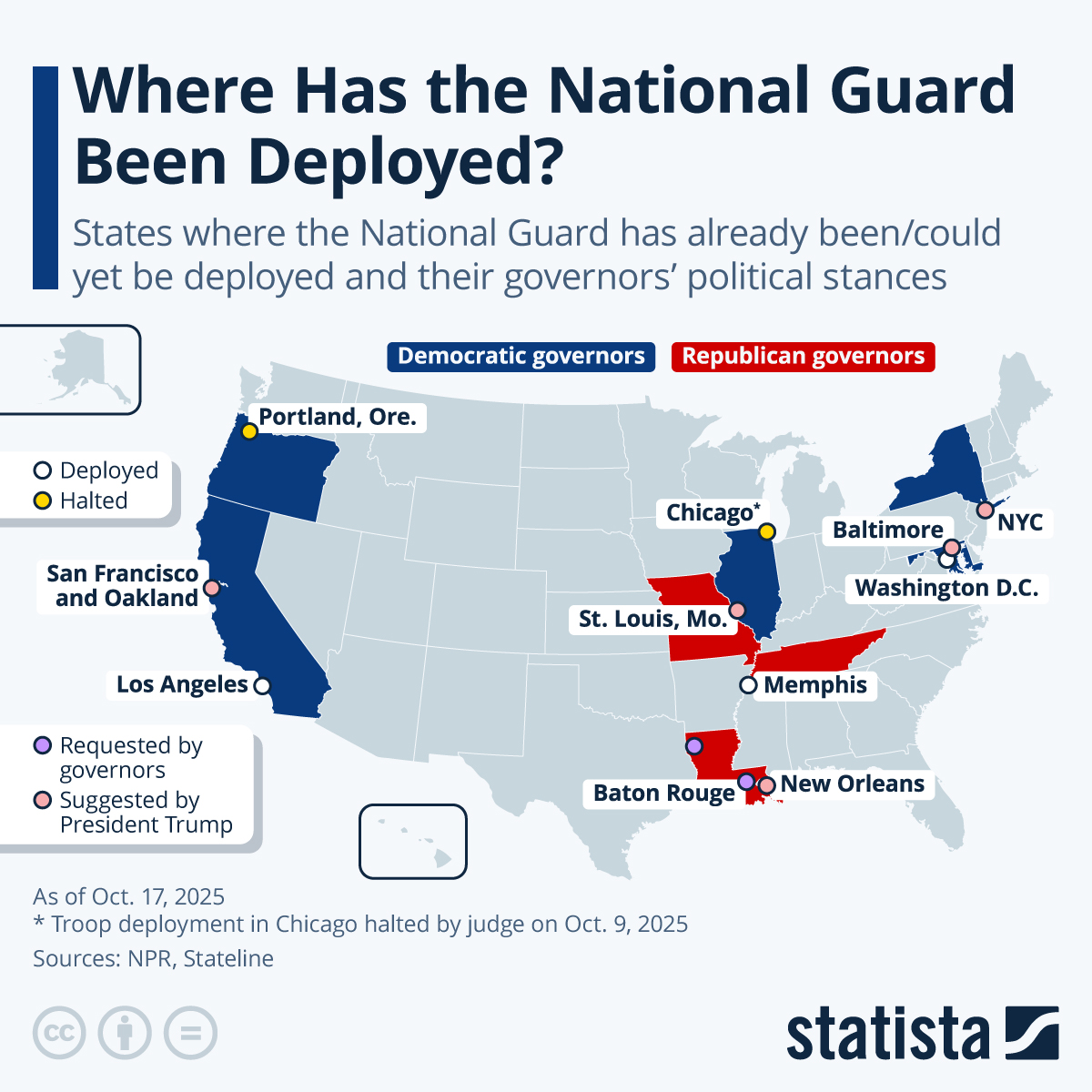
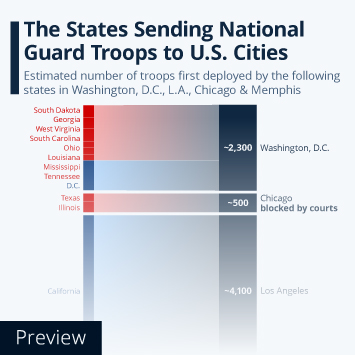
The National Guard is currently deployed in three cities in the United States: Washington D.C., Los Angeles and Memphis. While troops were briefly deployed in Chicago, they were blocked from activation by a judge on October 9. Similarly, court rulings have , as well as the deployment of National Guard troops from California to Portland.
In June, U.S. President Donald Trump ordered some 4,100 troops of the National Guard to Los Angeles amid protests against immigration raids. This was despite backlash from California Governor Gavin Newsom, who rejected the move. While the vast majority of these personnel have now been demobilized, around there as of the start of September.
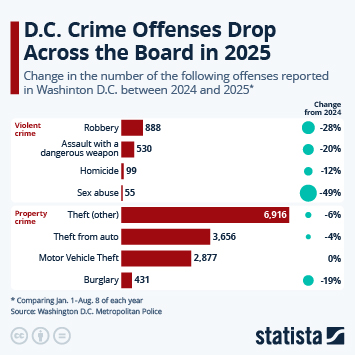
It soon became clear that it was not a standalone act, with the Trump administration then deploying roughly 2,300 troops to Washington D.C. in August, including some 800 from D.C., this time on account of countering crime and homelessness. While authorities in Georgia, Mississippi, South Carolina, Ohio and West Virginia told the Associated Press that they plan to withdraw their troops from the capital in late October and November, it remains unclear when the remaining out-of-state troops will also leave.
This wind down, however, comes as the Trump administration has pushed to increase the National Guard鈥檚 presence in other U.S. cities, including the aforementioned Chicago and Portland. Trump has also suggested over the past months sending troops to several other cities, including San Francisco, Oakland, St. Louis, Mo., Baltimore, New Orleans and New York City.
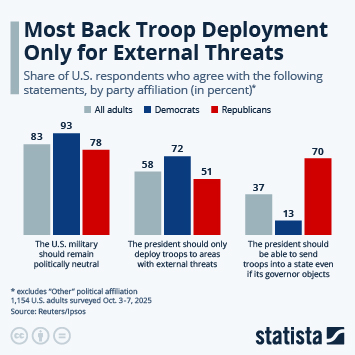
While most Americans do not support military involvement unless it's against an external threat, Louisiana Gov. Jeff Landry has that 1,000 Louisiana National Guard Troops be activated 鈥渢hroughout the state to urban centers鈥�, to address crime, mentioning Shreveport, Baton Rouge and New Orleans specifically.