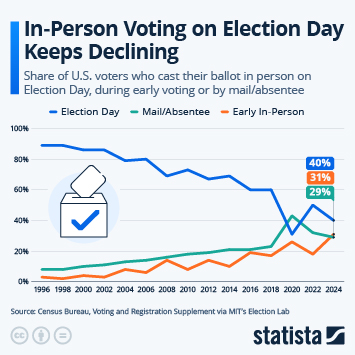
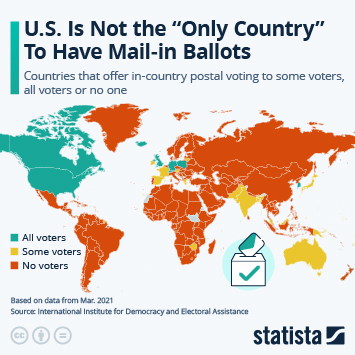
With the U.S. presidential election less than three months away and the coronavirus still raging across the country, concerns over holding a general election in the middle of a pandemic are mounting. As it looks unlikely that the situation can be resolved by November, many people think that universal mail-in voting would be preferable to 100+ million people casting their ballots in person.
With President Trump the most prominent and vocal opponent of mail-in voting, the debate over its pros and cons quickly turned into a deeply partisan issue. While Trump mail-in voting a 鈥漜atastrophic disaster鈥� and 鈥渁n easy way for foreign countries to enter the race鈥�, Democrats widely support the practice, with Sen. Amy Klobuchar that 鈥渧oters should not need to choose between their health and casting their ballots,鈥� and suggesting legislation to 鈥済uarantee every voter can cast a mail-in ballot and everyone has access to at least 20 days of early voting so we can reduce lines on Election Day for those that need to vote in person.鈥�
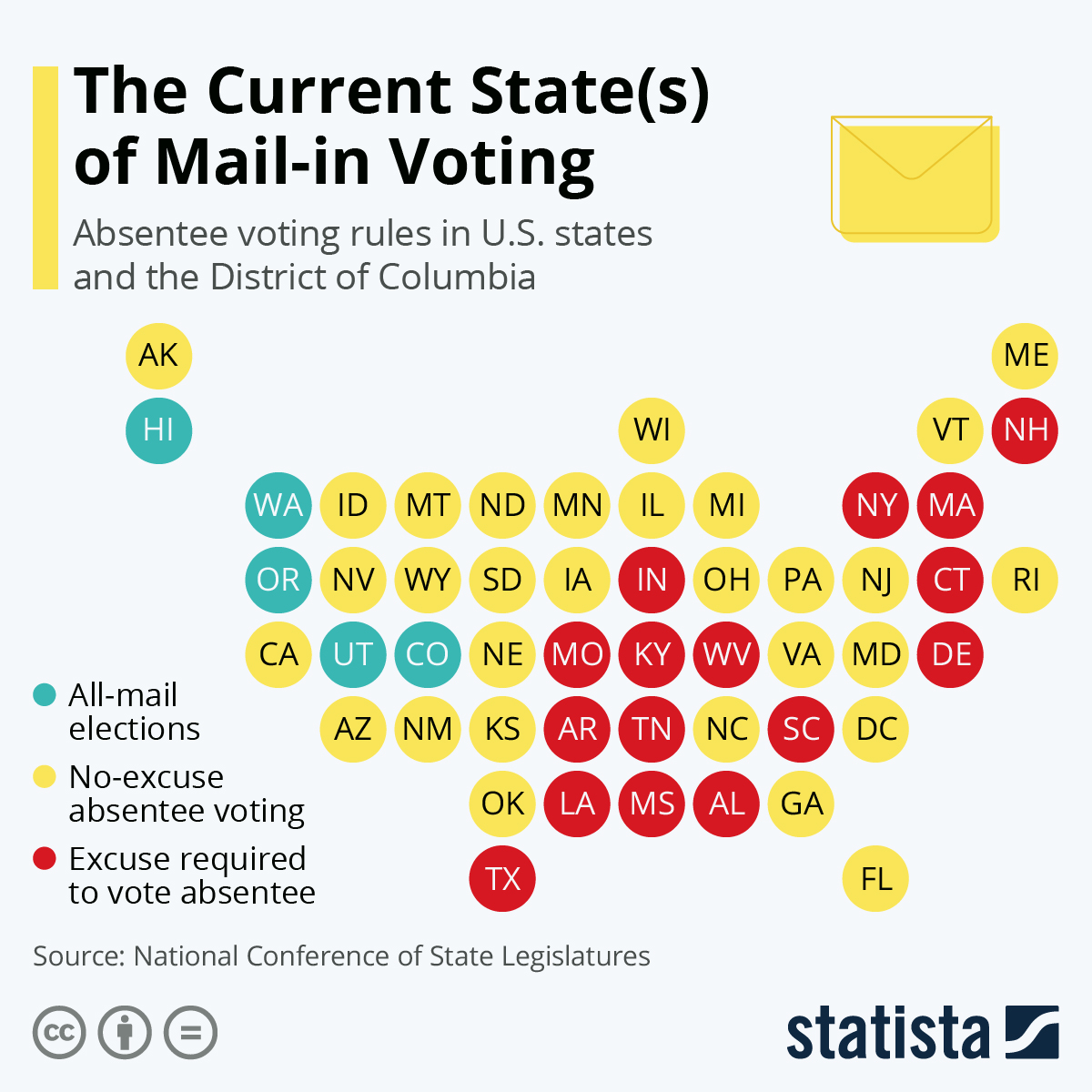
As the following chart, based on data compiled by the , shows, the current rules on mail-in voting vary heavily across states. While five states (Colorado, Hawaii, Oregon, Utah and Washington) hold all-mail elections, another 30 allow no-excuse absentee voting, meaning that voters don鈥檛 need to give a reason for casting their ballot by mail. The remaining states also allow mail-in voting, but require an excuse to do so, which often includes age, illness or other inhibiting factors.