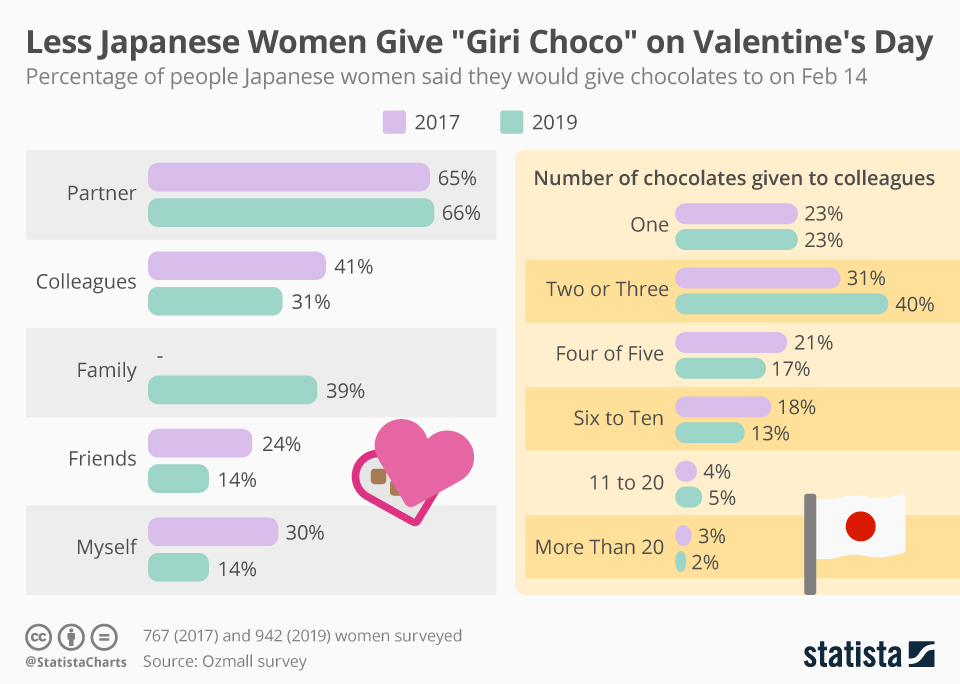
The practice of 鈥済iri choco鈥� 鈥� the giving of so-called 鈥渙bligation chocolates鈥� by female employees to their male colleagues on Valentine鈥檚 Day 鈥� has been causing some debate in Japan in recent years. Even though women get their own day of receiving chocolates, White Day on March 14, some have called the practice forced, awkward and even intolerable. Comparing data from (link in Japanese) shows that less women are planning to give out chocolates to their male colleagues on today鈥檚 Valentine鈥檚 Day than two years ago. Those who do plan to give out sweets are buying less.
Some Japanese companies have banned 鈥済iri choco鈥� and even a chocolate maker, Belgium company Godiva, . The data also shows that women have always preferred giving 鈥渉onmei choco鈥� 鈥� true feelings chocolates, with more than 60 percent saying they will give their partner a gift of chocolate.
Valentine鈥檚 Day chocolate giving has been a major tradition in Japan since the 1950s. The Japanese chocolate industry is making a sizable chuck of their sales leading up to Valentine鈥檚 Day. The practice of chocolate gift giving is not only popular in workplaces on Feb 14, but also in schools, among friends and as a marketing tool for companies.
Valentine's Day
Less Japanese Women Give "Giri Choco" on Valentine's Day

Description
This charts shows attitudes towards "giri choco", the practice of oligatory chocolate gift giving by Japanese employees to their co-workers on Valentine's Day.