Sovereign wealth funds worldwide - statistics & facts
Once limited to wealthier nations, sovereign wealth funds (SWFs) have evolved into some of the most powerful global investors, shaping markets and influencing national economies across continents. Their rapid expansion over the past two decades signals more than just fiscal prudence. It reflects strategic ambition in how countries secure their financial futures. As these state-owned giants grow in both number and scale, their influence on global capital flows has never been greater.
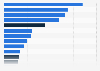
聽The number of SWFs grew steadily during the last few decades. A total of 38 new sovereign wealth funds were established worldwide over the five-year period from 2020 to 2025. This current rate is on track to match or exceed the number of newly established sovereign wealth funds during previous decades. The Middle East and North Africa, alongside Asia, have been the largest regions when it comes to assets under management of SWFs in recent times. China led the highest-ranked nations by SWF assets, managing roughly 3.54 trillion U.S. dollars, with the United Arab Emirates standing in second place.聽
What is a sovereign wealth fund?
SWFs are state-owned investment funds, commonly (but not always) funded by budget surplus generated from the country鈥檚 natural resources or foreign currency reserves. The object of an SWF is to generate an annual return on investments through effective asset allocation. The revenues generated from successful portfolio management are then used to better the local economy and society or reinvested to generate further profit. While all investments include some level of risk, some asset types are riskier than others. In an effort to decrease risk, SWFs tend to allocate the majority of assets to equity or fixed-income securities. Leaving a smaller portion of assets to be managed through alternative investment securities.