Discounters in Europe
Streamlined operations, limited assortments, and especially low prices: these are the key ingredients to the success of grocery discounters, which are increasingly gaining market share and have come a very long way. Today, the Schwarz Group, owner and operator of discounter Lidl, is the largest grocery retailer in Europe. German discount supermarkets seem to be dominating the market landscape not just in their home country but in Europe overall.
Discount supermarkets are a very successful business model that keeps growing. While each European country has its local chains, it is the German giants Aldi and Lidl that dominate the industry as they managed to spread all across the continent.
The German market
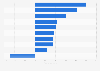
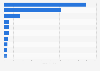
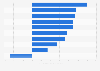
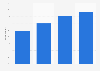
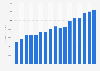
In the home of Aldi and Lidl, discount supermarkets have reached a share of close to 40 percent in 2024 in the food retail market. In terms of revenue, Aldi ranks first having generated close to 36 billion euros in the same year. Lidl came in second with about 32 billion euros. Aldi consists of two separate groups, owned by different members of the Albrecht family: Aldi Nord and Aldi S眉d, which, as the name suggests, operate in the northern and in the southern half of the country respectively. The company split over the question about whether or not cigarettes and tobacco products should be sold by the discounter. In the 1960s, Karl Albrecht, the owner of Aldi S眉d, decided against selling cigarettes in his stores. Taken together, the two Aldi branches counted over 4,200 stores in Germany in 2024, while Lidl stores amounted to 3,240.Other European markets
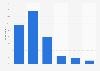
The German juggernauts also operate in most European countries. Aldi S眉d operates stores in the United Kingdom, Austria, Switzerland, Hungary, Ireland, Italy, and Slovenia; Aldi Nord is present in the rest of Western Europe and Poland. Lidl also expanded internationally as its stores populate 29 different European countries outside of Germany. Other European discounters either seldomly conduct business in multiple countries or only in a few selected ones. The Belgian Colruyt stores can only be found in Belgium, Luxembourg, and France. Polish discounter Biedronka runs stores only in Poland, while Eurospin only operates in Italy.Discount supermarkets are a very successful business model that keeps growing. While each European country has its local chains, it is the German giants Aldi and Lidl that dominate the industry as they managed to spread all across the continent.