Manya Rathore
Research expert covering India
Carbon capture and storage (CCS) is seen by many experts as a vital tool in combating climate change. CCS technologies are considered especially important for hard-to-abate industries that cannot be easily replaced by electrification, such as oil and gas, iron and steel, and cement and refining. However, CCS is still very much in its infancy, capturing well under one percent of global CO鈧� emissions per year. The industry now faces enormous challenges to scale up and live up to the hype.
CCS involves capturing CO鈧� at large point sources, such as exhaust streams from power stations, and transporting it to storage deep underground, thereby reducing emissions to the atmosphere. The majority of CO鈧� is currently captured and stored from industrial facilities, with natural gas processing plants accounting for roughly 60 percent of global operating capture capacity. Although the term CCS is often used interchangeably with carbon dioxide removal (CDR), there are differences between the two, with CDR mainly focused on removing historical emissions from the atmosphere.
The capture capacity of operational CCS facilities worldwide increased to around 64 MtCO鈧� per year as of mid-2025, up from 28 MtCO鈧� in 2014. Meanwhile, the capacity of CCS facilities in development has risen to more than 500 MtCO鈧� per year, with over 700 projects in the global CCS pipeline. As of 2024, the United States had the largest number of CCS projects in the pipeline, by far, with 276 across various stages of development, 19 of which were operational. The recent expansion has been driven by developments in global policies and regulations that have made the technology more attractive to investors. This has seen global investment in CCS reach roughly 11 billion U.S. dollars in 2023.
Although the Intergovernmental Panel on Climate Change has stressed that CCS will be crucial to reaching net-zero emissions by mid-century, levels of deployment have been slow. The high cost of implementation is one of the biggest challenges facing the scaling up of the industry. To stay aligned with a net-zero pathway, estimates state that annual global investment in CCS will need to average around 500 billion U.S. dollars per year through 2030, a massive increase from current levels. The Americas account for about half of all CCS projects worldwide, but broader international participation will be essential to close the gap.
Despite these challenges, progress is being made. If CCS technologies can mature at a more rapid pace, they could play a key role in the energy transition and helping the world achieve its climate targets.

Detailed statistics
Projected share of CO2 emissions captured with CCS 2030-2050

Detailed statistics
Number of large-scale CCUS facilities in operation worldwide 2012-2025

Detailed statistics
Operating CO鈧� capture capacity shares worldwide 2026, by region

Global CO鈧� emissions 1900-2024, by fuel type
Annual carbon dioxide (CO鈧�) emissions worldwide from 1900 to 2024, by fuel and industry type (in million metric tons)

Global atmospheric carbon dioxide concentration 1959-2025
Average carbon dioxide (CO鈧�) levels in the atmosphere worldwide from 1959 to 2025 (in parts per million)

Remaining global carbon budget to limit global warming 2026, by scenario
Remaining carbon budget to limit global warming to 1.5, 1.7, and 2 degrees Celsius from 2026 (in billion metric tons of carbon dioxide)

Global energy transition investments 2025, by technology
Investments in the energy transition worldwide in 2025, by technology (in billion U.S. dollars)
Projected share of CO2 emissions captured with CCS 2030-2050
Percentage of CO2 emissions captured with CCS worldwide from 2030 to 2050

Global large-scale carbon sequestration projects 2025, by status
Number of commercial carbon capture and storage (CCS) facilities worldwide in 2025, by status

Global commercial carbon sequestration projects 2025, by region
Number of commercial carbon capture and storage (CCS) facilities worldwide as of 2025, by region

Number and status of commercial CCS facilities worldwide 2025, by region
Number of commercial carbon capture and storage (CCS) facilities in select regions worldwide as of 2025, by status

Global commercial carbon sequestration projects 2024, by major country
Number of commercial carbon capture and storage (CCS) facilities worldwide as of 2024, by major country
Number of large-scale CCUS facilities in operation worldwide 2012-2025
Number of operational large-scale carbon capture, utilization, and storage (CCUS) facilities worldwide from 2012 to 2025

Global operational CCS projects 2024, by country
Number of operational commercial carbon capture and storage (CCS) facilities worldwide as of 2024, by country
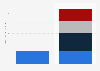
Carbon capture and storage capacity and regional additions worldwide 2024-2030
Carbon capture and storage capacity worldwide in 2024 and additions to 2030, by region (in million tons CO2 per year)

Global capacity of operational commercial CCS projects 2010-2025
Capture capacity of operational commercial carbon capture and storage (CCS) facilities worldwide from 2010 to 2025 (in million metric tons per year)

Global capacity of commercial CCS projects worldwide 2019-2025, by development stage
Capacity of commercial carbon capture and storage (CCS) facilities worldwide from 2019 to 2025, by development stage (in million metric tons per year)

Operating CO鈧� capture capacity shares worldwide 2026, by application
Distribution of operating carbon dioxide capture (CCS) capacity worldwide as of February 2026, by application
Operating CO鈧� capture capacity shares worldwide 2026, by region
Distribution of operating carbon dioxide capture (CCS) capacity worldwide as of February 2026, by region

Global CO鈧� capture capacity worldwide 2023, by country
Capacity of operational carbon capture and storage (CCS) facilities worldwide in 2023, by country (in million metric tons per year)

Largest global carbon sequestration projects in operation 2025
Capacity of operational large-scale carbon capture and storage facilities worldwide as of 2025 (in million metric tons per year)
Global energy transition investments 2025, by technology
Investments in the energy transition worldwide in 2025, by technology (in billion U.S. dollars)

Global share of investments in energy transition 2025, by technology
Distribution of investments in the energy transition worldwide in 2025, by technology

Global investment in carbon capture and storage 2018-2023
Carbon capture and storage investment worldwide from 2018 to 2023 (in billion U.S. dollars)

Global carbon capture and storage (CCS) VC investment 2025
Global venture capital investment into carbon capture and storage (CCUS) start-ups from 2022 to 2025 (in million U.S. dollars)

Leading CCS startups worldwide 2026, by funds raised
Total funds raised by leading carbon capture and storage (CCS) startups worldwide as of 2026 (in million U.S. dollars)
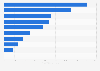
Total CAPEX of CCS projects in CEE 2025
Total capital expenditure (CAPEX) of CCS projects in Central and Eastern Europe as of 2025 (in million euros)

Carbon capture and storage readiness index worldwide 2026, by country
Carbon capture and storage (CCS) readiness index worldwide in 2026, by leading country

Global carbon capture and storage investment needs 2021-2030
Investments in carbon capture and storage (CCS) worldwide from 2021 to 2023, with requirements from 2024 to 2030 in NZE scenario (in billion U.S. dollars)

Global large-scale CCUS capacity outlook 2026-2035, by stage
Capacity of current and planned large-scale carbon capture, utilization, and storage (CCUS) facilities worldwide from 2026 to 2035, by stage (in million metric tons of carbon dioxide)

Projected share of global carbon capture capacity 2035, by application
Projected distribution of carbon capture capacity worldwide in 2035, by application

CO2 storage cost range in onshore setting 2025, by scenario
CO2 storage cost range in onshore setting worldwide as of 2025, by scenario (in U.S. dollars per tonne)

CO2 storage cost range in offshore setting 2025, by scenario
CO2 storage cost range in offshore setting worldwide as of 2025, by scenario

Cumulative CO鈧� savings worldwide in the net zero scenario 2030-2050, by measure
Carbon dioxide (CO鈧�) emissions reductions in cumulative savings worldwide in the Net Zero Scenario from 2030 to 2050, by mitigation measures (in billion metric tons of carbon dioxide)
Feel free to contact us anytime. We will respond to your inquiry as quickly as possible.