Target - statistics & facts
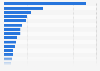
Target is one of the world鈥檚 biggest retailers across many key metrics such as revenue, brand value, and store numbers, despite being based exclusively within the United States. Within the domestic market, Target can be compared to Walmart, Costco, Dollar General, and other retail giants. As a general merchandise store, Target offers products across a wide range of categories, from groceries, to apparel, to consumer electronics. Of the nearly 2,000 Target stores across the U.S., the highest number was to be found in California, where there were more than twice as many as in Texas, the state with the second highest number of stores.
Target鈥檚 sales performance
In 2025, Target鈥檚 sales fell by 1.7 percent, which was the third year in a row that sales have decreased. This resulted in聽Target鈥檚 net sales reaching a total of roughly 105 billion U.S. dollars in 2025. This was still a great year for Target, as sales were higher than in any year before the pandemic, and over 31 billion dollars higher than ten years prior. Despite slightly falling sales figures, nationwide store numbers actually increased that year, by 17. Although most of Target鈥檚 sales come from physical stores, the company鈥檚 share of sales from the online segment has been increasing over the years.
Walmart with the upper hand
Walmart has the upper hand over Target in the general merchandise market, achieving net sales of almost 483 billion dollars in the 2025 financial year in the U.S. alone, not including Sam鈥檚 Club sales. This was over four times as much as Target鈥檚 net sales in the most recent financial year. Results were much closer in a consumer survey of Americans鈥� favorite general merchandise stores, where both department stores ranked at 60%, leaving them in the fourth place overall.聽
While Target may have a way to go to catch up with Walmart, it nevertheless remains one of the biggest companies in the United States, and will look to make more gains in the market over the coming years.