Trade corridors in the MENA region: Logistics disruptions in the Strait of Hormuz and Red Sea - statistics & facts
The Middle East and North Africa (MENA) region sits at the crossroads of global trade, connecting Asia, Africa, and Europe through some of the world鈥檚 busiest maritime and aviation hubs. From the Suez Canal to the Strait of Hormuz, its strategic position underpins the flow of energy, goods, and capital. Yet, while these corridors drive economic opportunity, they are also exposed to geopolitical tensions and regional instability. Since the United States鈥� and Israel鈥檚 strikes on Iran in February 2026 and the subsequent closure of the Strait of Hormuz by Iran, the economic impact of the war has been felt far beyond the region.
Trade hubs and regional corridors
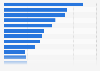
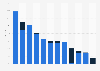
MENA鈥檚 trade system is anchored by a network of major seaports and transport corridors. The remains one of the world鈥檚 most critical chokepoints connecting Asia and Europe. On the Arabian Peninsula, ports in Dubai processed more than 15.6 million containers in 2024, serving as a transshipment hub for Gulf and South Asian markets.
Gulf states are investing in logistics zones, rail links, and free-trade hubs to diversify beyond oil, seeking to capture more value in re-exports and supply chain services. However, energy remains a defining element of MENA鈥檚 trade role. The Strait of Hormuz is one of the most significant shipping routes for crude oil worldwide, with over a third of oil shipped by sea passing through the Strait of Hormuz in 2024, underscoring the region鈥檚 enduring weight in energy security.
Closure of the Strait of Hormuz
Following the U.S. and Israeli strikes on Iran, the country began attacking ships in the Persian Gulf and Strait of Hormuz to forcefully stop ships from transiting the strait. The strikes, which targeted nearly 30 ships in the first half of March 2026, brought commercial ship traffic in the area to a near standstill and led to a major spike in global oil prices. On March 16, 2026, Brent crude oil prices climbed to over 100 U.S. dollars per barrel. In addition to oil, the Strait of Hormuz is an important shipping corridor for other commodities as well, among them minerals, petrochemical and agricultural products, which have seen an increase in prices.
The increased risk of shipping in the region also led to insurance premiums for ships passing through the strait increasing three-fold or more according to reports, which further drives up prices in the global shipping market, as can be observed in the recent uptick of container freight rates. The newly increased insurance premiums are expected to remain elevated, even if the Strait of Hormuz is opened, reflecting the uncertain political environment.
Long-term trade disruptions
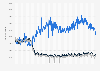
This new crisis comes in the context of ongoing trade disruptions in the region: From late 2023, Houthi forces in Yemen began targeting vessels in the Red Sea, stating the attacks were aimed at ships linked to Israel in response to the war on Gaza. The campaign forced major carriers such as Maersk, Hapag-Lloyd, and MSC to divert traffic away from the Bab-el-Mandeb Strait and the Suez Canal and reroute around the Cape of Good Hope, adding up to 30 days to voyages for certain goods. Despite attacks having largely ceased since a deescalation agreement was signed in June 2024, maritime traffic through the Red Sea has remained at very low levels.
The impact on global trade was significant. Rerouting ships extended delivery times and increased fuel consumption, while freight and insurance costs climbed across supply chains. Container rates surged, war-risk premiums rose for ships in the Red Sea, and Suez Canal traffic dropped by about two thirds. Industries reliant on just-in-time logistics, from consumer electronics to automotive parts, felt the squeeze, with rising costs passed on to markets worldwide.
For MENA economies dependent on trade and re-exports, stability in key corridors is central to macroeconomic resilience, while disruptions in these chokepoints carry an outsized impact on global commerce. The region鈥檚 role as a global gateway remains vital, but ongoing instability highlights the fragility of these routes when political and security risks arise.聽