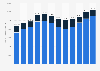
| Characteristic | Cars | Commercial vehicles |
|---|---|---|
| - | - | - |
| - | - | - |
| - | - | - |
| - | - | - |
| - | - | - |
The chart is not accessible to screen readers. Please switch to the table view to access the data.
Download
Source
More information
Region
Australia
Survey time period
2013 to 2017
Supplementary notes
The source does not give a release date. The date displayed here is the date of access.
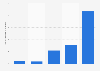
Figures from 2013 to 2016 are taken from previous editions.
Commercial vehicles include light commercial vehicles, heavy trucks, and coaches and buses.
Light commercial vehicles are motor vehicles with at least four wheels, used for the carriage of goods. Mass given in tons (metric tons) is used as a limit between light commercial vehicles and heavy trucks. This limit depends on national and professional definitions and varies between 3.5 and 7 tons. Minibuses, derived from light commercial vehicles, are used for the transport of passengers, comprising more than eight seats in addition to the driver's seat and having a maximum mass between 3.5 and 7 tons.
Heavy trucks are vehicles intended for the carriage of goods. Maximum authorized mass is over the limit (ranging from 3.5 to 7 tons) of light commercial vehicles. They include tractor vehicles designed for towing semi-trailers.
Buses and coaches are used for the transport of passengers, comprising more than eight seats in addition to the driver's seat, and having a maximum mass over the limit (ranging from 3.5 to 7 tons) of light commercial vehicles.
Citation formats