| Characteristic | Forest area in millions of ha |
|---|---|
| - | - |
| - | - |
| - | - |
| - | - |
| - | - |
| - | - |
| - | - |
| - | - |
| - | - |
| - | - |
| - | - |
| - | - |
| - | - |
| - | - |
The chart is not accessible to screen readers. Please switch to the table view to access the data.
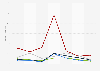
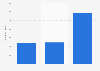
Colombia
1990 - 2021
estimates; only includes wooded areas*
The figures have been rounded.
* According to the definition of the United Nations Food and Agriculture Organization (FAO), a forest area includes natural forests and forest plantations. It is used to refer to land with a tree canopy cover of more than 10 percent and an area of more than 0.5 ha. Forests are determined both by the presence of trees and by the absence of other predominant land uses. Trees must be able to reach a minimum height of 5 m. Young stands that have not yet reached a canopy density of 10 percent and a tree height of 5 m, but are expected to do so, are included in the forest category, as are temporarily unpopulated areas. The term includes forests used for production, protection, multiple use, or conservation purposes (i.e., forests in national parks, nature reserves, and other protected areas), as well as forest masses on agricultural land (e.g., windbreaks and tree protection belts wider than 20 m), and rubberwood plantations and cork oak stands. The term specifically excludes tree stands established mainly for agricultural production, such as fruit tree plantations. It also excludes trees planted in agroforestry systems.