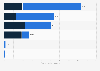
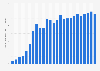
| Characteristic | Solid biofuels and renewable waste | Biogases |
|---|---|---|
| 2018 | 27.17 | 5.7 |
| 2017 | 23.99 | 6.04 |
| 2016 | 22.29 | 6.36 |
| 2015 | 22.01 | 6.46 |
| 2014 | 15.72 | 6.9 |
| 2013 | 11.45 | 6.65 |
| 2012 | 8.29 | 6.44 |
| 2011 | 6.98 | 6.33 |
| 2010 | 6.2 | 6.06 |
The chart is not accessible to screen readers. Please switch to the table view to access the data.
Loading statistic...
Download
Source
Sources
Release date
June 2020
More information
Region
United Kingdom
Survey time period
2010 to 2018
Supplementary notes
The source provides the following definitions:
Solid biofuels covers solid organic, non-fossil material of biological origin (also known as biomass) which may be used as fuel for heat production or electricity generation. In energy statistics, solid biofuels is a product aggregate equal to the sum of charcoal, fuelwood, wood residues and by-products, black liquor, bagasse, animal waste, other vegetal materials and residuals and renewable fraction of industrial waste.
Biogas is a gas composed principally of methane and carbon dioxide produced by anaerobic digestion of biomass or by thermal processes from biomass, including biomass in waste. In energy statistics, biogas is a product aggregate equal to the sum of landfill gas, sewage sludge gas, other biogases from anaerobic digestion and biogases from thermal processes.
Liquid biofuels includes all liquid fuels of natural origin (e.g. produced from biomass and/or the biodegradable fraction of waste), suitable to be blended with or replace liquid fuels from fossil origin. In energy statistics, liquid biofuels is a product aggregate equal to the sum of biogasoline, biodiesels, bio jet kerosene and other liquid biofuels.
Citation formats