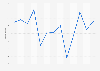
| Characteristic | Ipsos economic index |
|---|---|
| - | - |
| - | - |
| - | - |
| - | - |
| - | - |
| - | - |
| - | - |
| - | - |
| - | - |
| - | - |
| - | - |
| - | - |
| - | - |
| - | - |
| - | - |
| - | - |
| - | - |
| - | - |
| - | - |
| - | - |
| - | - |
| - | - |
| - | - |
| - | - |
| - | - |
The chart is not accessible to screen readers. Please switch to the table view to access the data.
March 2023
Asia, China
March 2021 to March 2023
1,000+ adults
16 to 74 years
survey sample were more urban and educated, and with higher incomes than the national average
Online panel
Since April 2023, China is no longer included in Ipsos' Global Consumer Confidence Index.
The Index is normalized to a 0 to 100-point range with 鈥�50鈥� representing the historical median. Index values are calculated by utilizing data from individual survey question results.
The index reflects respondent perceptions of current and future local economy, current and future financial situation, major purchase comfort, household purchase comfort, job security, investment confidence, job loss experience, and job loss expectations in their country.
The source does not provide a release date. The date given is the date of data access.