| Characteristic | Share of respondents |
|---|---|
| - | - |
| - | - |
| - | - |
| - | - |
| - | - |
The chart is not accessible to screen readers. Please switch to the table view to access the data.
July 2018
France
April 20 - May 4, 2018
20,767*
16-64 years*
Online panel
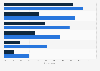
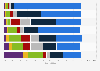
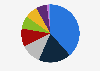
* The question was formulated by the source as follows: "Telemedecine enables patients to consult doctors or specialists without having to visit them in person, using video, audio and / or messaging applications on a computer, a tablet or a smartphone. Which of the following best describes your thoughts on using telemedecine? 禄
** The source adds the following information:
"鈥� The survey comprising questions A1-A5 was conducted between
April 20 and May 4, 2018 with 20,767 adults across 27 countries:
Argentina, Australia, Belgium, Brazil, Canada, Chile, China, France,
Great Britain, Germany, Hungary, India, Italy, Japan, Malaysia,
Mexico, Peru, Poland, Russia, Saudi Arabia, Serbia, South Africa,
South Korea, Spain, Sweden, Turkey and the United States.
鈥� The survey comprising questions B1-B13 was conducted between
May 25 and June 8, 2018 with 23,249 adults across 28 countries
(the same as above plus Colombia)
鈥� All survey respondents are aged 18-64 in Canada and the U.S.
16-64 in all other countries.
鈥� The sample size for each survey is approximately
N = 1,000 for Australia, Brazil, Canada, China, France, Italy, Japan,
Malaysia, Spain, Great Britain, Germany, and the U.S., and
approximately N = 500 for Argentina, Belgium, Colombia, Chile,
Hungary, India, Mexico, Peru, Poland, Russia, Saudi Arabia,
Serbia, South Africa, South Korea, Sweden, Turkey.
鈥� Weighting has been employed to balance demographics and
ensure that the sample's composition reflects that of the adult
population according to the most recent country census data.
鈥� A survey with an unweighted probability sample of this size would
have an estimated margin of error of +/- 3.1 percentage points for
a sample of 1,000 and an estimated margin of error of +/- 4.5
percentage points for 500 sample 19 times out of 20.
鈥� In 17 of the countries surveyed, internet penetration is
high to think of the samples as representative of the national
population within the ages ranges covered: Argentina, Australia,
Belgium, Canada, France, Germany, Hungary, Italy, Japan, Poland,
Serbia, South Korea, Spain, Sweden, Great Britain, and U.S.
Brazil, Chile, China, Colombia, India, Malaysia, Mexico, Russia,
Peru, South Africa, Saudi Arabia and Turkey have lower levels of
internet penetration. Samples from those countries should not be
considered to be fully nationally representative, but rather
represent a more tributary, connected population, representing an
important and emerging middle class
鈥� Results can not always be 100% or may be 1 point
higher / lower than the actuals due to rounding, multiple responses
or the exclusion of not known or not stated responses. "