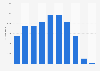
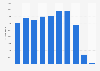
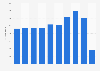
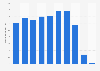
| Filing Year | In force** | Pending | Inactive |
|---|---|---|---|
| - | - | - | - |
| - | - | - | - |
| - | - | - | - |
| - | - | - | - |
| - | - | - | - |
| - | - | - | - |
| - | - | - | - |
| - | - | - | - |
| - | - | - | - |
| - | - | - | - |
| - | - | - | - |
| - | - | - | - |
| - | - | - | - |
| - | - | - | - |
| - | - | - | - |
| - | - | - | - |
| - | - | - | - |
| - | - | - | - |
| - | - | - | - |
| - | - | - | - |
| - | - | - | - |
The chart is not accessible to screen readers. Please switch to the table view to access the data.
LexisNexis PatentSight
August 2020
Worldwide
August 6, 2019
* A patent family is defined as a group of patent documents all of which have the same set of priorities. I.e., it is a group of patent documents that protect the same invention across authorities.
** The 'In force' category covers patent families that have been granted and are active.
*** As it usually takes 18 months after first filing for a patent to get published, the data for 2019 is subject to change.
The owner of a patent includes all patents owned by a company and its subsidiaries (by at least 50%) based on comprehensive research on corporate structures, M&A, Spin-offs, company names changes, patent transactions. PatentSight also tracks former names of companies and subsidiaries, ongoing mergers and acquisitions, acquisitions of the past, reassignments, companies that have the same applicant, and transliterations by patent offices.