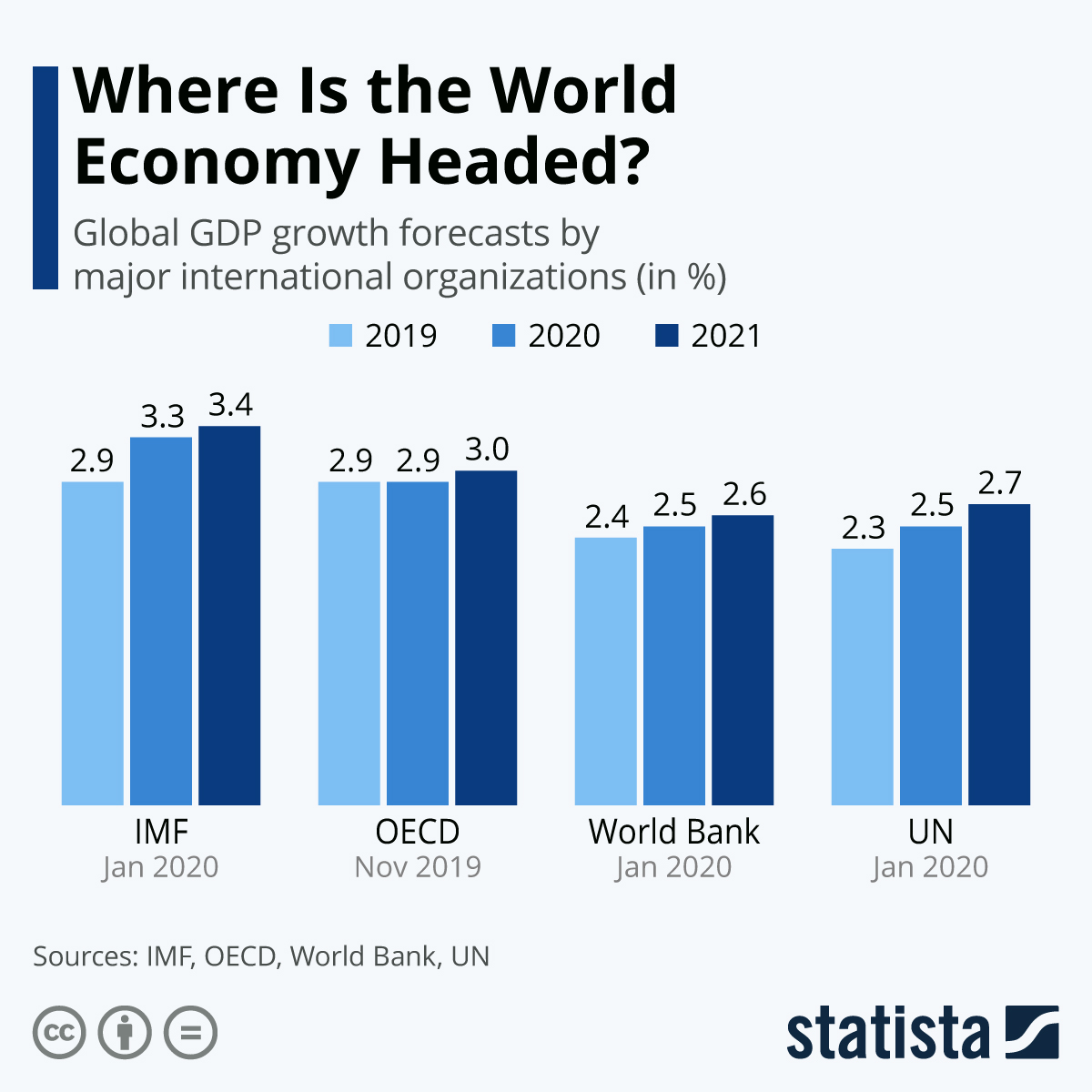
As world leaders are descending on Davos, Switzerland for the World Economic Forum鈥檚 50th annual summit, experts are struggling to figure out where the world economy is headed. The IMF is the latest major organization to , cutting 0.1 points off its GDP growth forecast for 2019 and 2020 and 0.2 points off its 2021 prediction.
In tentatively lowering its forecast, the IMF tried to balance easing risk factors on the one hand (U.S.-China trade war, no-deal Brexit) with growing concerns over other issues (tensions in the Middle East, social unrest) while also taking into account persistent issues such as slowdowns in former growth drivers India and China. The IMF鈥檚 latest downward revision is the fourth since January 2019, when the organization had projected growth rates of 3.5 and 3.6 percent for 2019 and 2020.
The IMF remains relatively optimistic compared to other major forecasting organizations, however, none of which expect the world economy to bounce back as quickly in 2020 and 2021 as the IMF does. Cautious optimism notwithstanding, Gita Gopinath, the IMF鈥檚 chief economist, pointed out that 鈥渢he projected recovery for global growth remains uncertain. It continues to rely on recoveries in stressed and underperforming emerging market economies, as growth in advanced economies stabilizes at close to current levels.鈥�
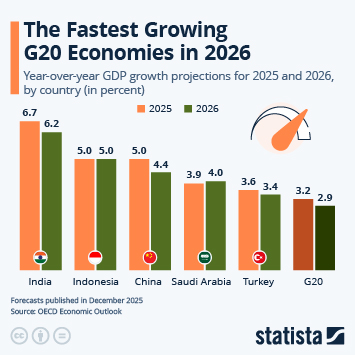
As the following chart shows, estimates for this year鈥檚 global economic growth range from 2.5 percent ( and ) to 3.3 percent (IMF). The same holds true for 2021, when the World Bank puts global GDP growth at 2.6 percent, 0.8 points below the IMF鈥檚 prediction of 3.4 percent.