Coffee market in Vietnam - statistics & facts
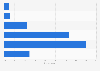
Over the past decades, Vietnam has positioned itself as one of the leading coffee producers and exporters in the world, in second place behind Brazil. While it produces a large amount of coffee, domestic demand has remained modest until recently. With the emergence of local and international caf茅 chains and the changing consumption patterns of young Vietnamese, coffee has grown in popularity in recent years.
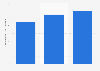
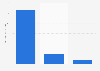
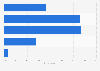
Being one of the country's most important agricultural products, coffee production in Vietnam has grown into an export-oriented industry over the last decades, contributing billions of dollars to the country's total export turnover. In terms of coffee exports, European countries accounted for the largest share of export volume in recent years, with Germany, in particular, being the leading coffee export partner for Vietnam. While coffee beans still dominate the share of coffee exports from Vietnam, there has been a steady increase in the volume of exported processed coffee variants, including soluble, and roast and ground coffee. The gradual shift from exporting raw coffee beans to exporting processed coffee has helped increase the value of Vietnam鈥檚 coffee exports.
Coffee production and exports in Vietnam
Introduced to Vietnamese farmers by French colonists in the 19th century, coffee has become embedded in the local culture as well as the economy. At that time, Vietnam was far from being a relevant coffee-producing nation, as it was responsible for around one percent of the world coffee trade before 1990. Heavy investment in coffee production under Doi Moi reforms in the mid-1980s made it possible for the Vietnamese coffee industry to achieve rapid growth, which led to its current position as one of the largest coffee-producing countries worldwide. Moreover, the warm climate and abundant rainfall in Vietnam provide ideal conditions for cultivating coffee, particularly the Robusta variety. As a result, the country produced approximately 26.5 million 60-kilogram bags of Robusta coffee during the 2023/24 production period.Being one of the country's most important agricultural products, coffee production in Vietnam has grown into an export-oriented industry over the last decades, contributing billions of dollars to the country's total export turnover. In terms of coffee exports, European countries accounted for the largest share of export volume in recent years, with Germany, in particular, being the leading coffee export partner for Vietnam. While coffee beans still dominate the share of coffee exports from Vietnam, there has been a steady increase in the volume of exported processed coffee variants, including soluble, and roast and ground coffee. The gradual shift from exporting raw coffee beans to exporting processed coffee has helped increase the value of Vietnam鈥檚 coffee exports.