
Matej Mikulic
Research expert covering health, pharma & medtech
The global market for anti-aging products was valued at around 50 billion U.S. dollars in 2024 and is expected to increase to nearly 80 billion by the beginning of the next decade. However, projections of the market can differ significantly, depending on how anti-aging is defined and what it encompasses. Most often, anti-aging is connected to some kind of skin and hair treatment, but by some other definitions, it can also include cosmetic procedures like breast augmentation and liposuction as well as dental care and dietary measures. Although often mentioned in a similar context, anti-aging should not be confused with longevity. To put it short, while the first is focused on lessening (some of the most obvious) effects of aging, the latter鈥檚 aim is to extend the actual lifespan.
In general, aging is not recognized as a disease by physicians and health organizations. Aging is mostly considered something universal and inevitable. However, the decay of the human body that comes with age makes the appearance of many diseases more likely. But there are also opinions that see aging more concretely as a disease, a disease complex, or at least as a syndrome. Going one step further, this could implicate a larger future involvement of the pharmaceutical industry in the research and development of anti-aging products and even life-extending drugs. As of now, the classic anti-aging market is still mostly dominated by big cosmetics and personal care companies, like 尝鈥橭谤别补濒, Estee Lauder, Procter & Gamble, and Unilever.
Anti-aging is a marketing term. Unfortunately, the term itself indicates that aging is something negative and that the potential consumer should buy any product necessary to slow it down. Although the market shows a growing male segment, it is still heavily dependent on its female consumers. That is coherent with a specific image of women that has its roots in much of 20th-century advertising, where female consumers were told to be aware of aging and to look as young and good as possible鈥攆or their male partners. A survey among women showed that millennials are starting to use anti-aging products at an average age of 26, while today鈥檚 55-year-olds started using such products at an average age of 47. Accordingly, industry experts state that the targeted age for anti-aging products nowadays starts at around 25.
One of the most prominent products used in anti-aging is botulinum toxin, better known under its first brand name, Botox. Originally a dangerous neurotoxin, it was in the early 90s when researchers found its positive effect on wrinkles. In 2002, pharmaceutical company Allergan gained FDA approval to market Botox for cosmetic purposes. Botox is injected directly into parts of the patient鈥檚 face, and the wrinkle-reducing effect lasts around six months. Beauty- and youth-obsessed Hollywood played a considerable role in the promotion of Botox. The fact that during Botox treatments some celebrities bizarrely changed their looks did not break the hype about it, and soon it became attractive to a broader audience. Today, injecting botulinum toxin for anti-aging is the world鈥檚 most performed non-surgical cosmetic procedure. The global market for botulinum toxin used for aesthetic purposes is currently estimated at seven billion U.S. dollars.

Detailed statistics
Value of the global anti-aging products market 2022-2032

Detailed statistics
Latin America: anti-aging market value 2022-2027

Detailed statistics
Global anti-aging devices market share by device type in 2017 and 2028
Value of the global anti-aging products market 2022-2032
Size of the anti-aging products market worldwide from 2022 to 2032 (in billion U.S. dollars)

Revenue of the leading ten beauty companies worldwide 2025
Revenue of the leading ten beauty companies worldwide in 2025 (in billion U.S. dollars)

Leading cosmetics and beauty companies worldwide based on market capitalization 2026
Leading cosmetics and beauty companies worldwide in 2026, based on market capitalization (in billion U.S. dollars)

Value of U.S. dermatologics market 2016-2025
Value of U.S. dermatologics market from 2016 to 2025 (in billion U.S. dollars)

U.S. skin care sales 2025, by segment
Skin care sales in the United States in 2025, by segment (in million U.S. dollars)

Most common face care problems in the U.S. 2023
Most common face care problems in the U.S. 2023

Motives for using face care products in the U.S. 2023
Most common motives for using face care products in the U.S. 2023
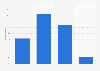
Purchasers of anti-aging products in the U.S. in 2025, by generation
Percentage of anti-aging product purchasers in the United States as of October 2025, by generation
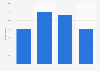
Share of anti-aging product purchasers in U.S. generations 2025
Share of anti-aging product purchasers within generations in the U.S. as of October 2025
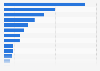
Most common surgical cosmetic procedures in the U.S. 2024
Most performed surgical cosmetic procedures in the United States in 2024

Most common non-invasive cosmetic procedures in the U.S. 2024
Most performed minimally invasive cosmetic procedures in the United States in 2024

Cosmetic procedures most often considered by U.S. consumers 2025
Cosmetic procedures most often considered by U.S. consumers as of 2025

Average costs of major nonsurgical cosmetic procedures in the U.S. 2023
Average surgeon/physician fees for cosmetic minimally invasive procedures in the United States in 2023 (in U.S. dollars)

Botulinum toxin market size worldwide from 2022-2032
Botulinum toxin market size worldwide from 2022 to 2032 (in billion U.S. dollars)

Most bothersome cosmetic concerns U.S. 2025
Percentage of U.S. consumers who said select cosmetic concerns were most bothersome as of 2025

U.S. patient satisfaction: non-invasive cosmetic procedures 2025
Satisfaction among U.S. patients following select common nonsurgical cosmetic procedures as of 2025

U.S. patient satisfaction: surgical cosmetic procedures 2025
Satisfaction among U.S. patients following most common surgical cosmetic procedures as of 2025

Top factors in cosmetic procedures provider selection in the U.S. 2023
Top factors that impact consumer's decision when selecting a provider for cosmetic dermatologic procedure in the U.S. in 2023
Feel free to contact us anytime. We will respond to your inquiry as quickly as possible.


