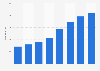
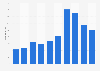
| Characteristic | Investments after consolidation | Investments before consolidation |
|---|---|---|
| - | - | - |
| - | - | - |
| - | - | - |
| - | - | - |
| - | - | - |
| - | - | - |
| - | - | - |
| - | - | - |
| - | - | - |
The chart is not accessible to screen readers. Please switch to the table view to access the data.
July 2017
Netherlands
2008 to 2016
According to the source debt securities are "negotiable financial instruments serving as evidence of debt. Short-term securities include all securities with a maximum term of one year, which in principle are transferable against a price that has been fixed in advance. Usually, the obliged interest payments of the debtor have been discounted in the value. Transferable' means that assets can be converted into cash from, or on a date that has been appointed at the moment the bond was issued. This transaction covers treasury paper issued by both the Dutch government and foreign governments, saving certificates to bearer and transferable certificates of deposits, issued by banks. Long-term securities include all transferable securities, which generally do not mature within one year. They are usually quoted at the stock exchange. The interest on long-term bonds is made payable through coupons. Mortgage bonds, notes issued by banks and convertible bonds as long as they have not been converted into shares, also belong to this type of assets."
The source defines the investment before consolidation as "the total investments in accordance with the guidelines and concepts of the new European System of Accounts 2010 (ESA 2010). This includes shares in Dutch investment funds."
The investments after consolidation is defined by the source as: "the total investments in which the shares in Dutch investment funds have been replaced by the investments of these funds. The availability of sources limits the possibility for figures for pension funds only."
* The number provided for 2016 is provisional.