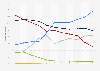
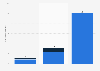
| Characteristic | Number of households in millions |
|---|---|
| - | - |
| - | - |
| - | - |
| - | - |
| - | - |
| - | - |
| - | - |
| - | - |
| - | - |
| - | - |
| - | - |
| - | - |
| - | - |
| - | - |
The chart is not accessible to screen readers. Please switch to the table view to access the data.
Download
Source
Source
Release date
June 2018
More information
Region
United Kingdom (England)
Survey time period
2003 to 2016
Supplementary notes
*According to the source, the figures for 2016 are an approximation.
Figures for the years from 2003 to 2014 were taken from a previous version of this report.
Fuel poverty in England is determined according to Low Income High Costs (LIHC) definition of fuel poverty. Under the LIHC definition of fuel poverty, a household is considered to be in fuel poverty if:
-they have above average required fuel costs; and
-should they spend that amount, the residual income of the household would be below the poverty line.
Citation formats