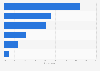


| Characteristic | Share of respondents |
|---|---|
| Do not open it | 60% |
| Delete it without marking it as spam/junk | 41% |
| Move to a 'junk mail' folder | 34% |
| Hit the 'This is Spam' button | 32% |
| Report it to the legitimate company/institution | 21% |
| Run my anti-virus software | 18% |
| Read it without opening any attachment/clicking on any link | 13% |
| Use the 'Unsubscribe' link | 12% |
| Report it to my ISP/ESP | 11% |
| Report it to a third party spam/e-mail-abuse reporting service/gov't agency | 9% |
| Ask a family member/friend what to do | 4% |
| Change my email address | 1% |
| Other | 3% |
| None of the above | 2% |
The chart is not accessible to screen readers. Please switch to the table view to access the data.
Loading statistic...
Download
Source
Source
Release date
March 2010
More information
Region
Worldwide
Survey time period
January 2010
Age group
18 years and older
Special properties
People who own at least one email address
Method of interview
Online survey
Supplementary notes
This question was asked in the survey in the following wording: "When you receive email that you suspect to be fraudulent, what do you typically do?"
Citation formats