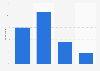
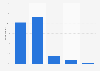
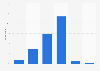
*The original year of the data may vary from one city to another. **The population data dates from 2022. ***No exact figure is provided by China on the number of cameras in each city; however, a total of 540 million surveillance cameras in China in 2021 is reported. With a population of 1.46 billion inhabitants (according to the most recent United Nations estimates), this means there are 439 cameras per 1,000 inhabitants in China.
This statistic represents the number of surveillance cameras per 1,000 inhabitants in major cities worldwide in 2023. According to the source, there was an average of *** cameras per 1,000 inhabitants in Chinese cities, representing almost one camera for every two people. This ratio can vary significantly from one Chinese city to another, but local authorities do not publish these figures; only the total number of surveillance cameras across the entire country is known, relative to the size of the Chinese population. This ratio is therefore nearly *** times higher than the second city (outside China) in this ranking, Hyderabad, India, with ** cameras per 1,000 inhabitants. Meanwhile, in Paris, there are only * cameras per 1,000 inhabitants. In the era of ubiquitous technology, video surveillance is an essential element for public safety but is also considered an intrusive tool.
Mass surveillance in the name of security
China dominates urban surveillance: ** percent of the surveillance cameras installed worldwide are in Chinese cities. This omnipresence of surveillance raises major questions about privacy and individual freedoms, while Chinese authorities justify these measures as essential to public safety. Since 2015, the crime situation in China has shown a sharp decline, with a total of **** million cases in 2022, the lowest figure in the past ten years. In Europe, although video surveillance is less prevalent, many surveillance cameras are installed in cities to ensure citizens' safety. In the British system, video surveillance is well established. In London, cameras are found throughout the city and no longer draw attention from residents. In France, it is mainly local elected officials who decide to equip their cities, for example, Nice, which leads the country in the number of surveillance cameras per inhabitant. This is explained by past events such as the July 14, 2016 attack. An experiment was launched to report an offense from a smartphone via the Reporty app, which allowed a live video call to emergency services, law enforcement, and municipal services. However, the CNIL (French data protection authority) considered that the balance between security efforts and the disturbance of freedoms was not respected and decided not to implement it after a two-month test in 2018.
Big Brother is watching you: a threat to citizens' freedom
In an increasingly connected world, where the number of cameras is exploding and technologies such as facial recognition are spreading, it is important to emphasize the need for clear regulation of these practices to guarantee citizens' rights and prevent abuses. Like George Orwell’s dystopian novel 1984, increased video surveillance in authoritarian countries can be used as a tool of repression. This is already the case in China, where large-scale camera installation supports a points system: the "social credit," which rewards or penalizes residents based on their level of moral integrity. Yet, mass surveillance seems increasingly accepted, even in democratic countries. The daily use of smartphones has become the norm, and sharing even very personal data with private companies is widespread. In the European Union, laws such as the GDPR are implemented to protect citizens' privacy. However, the use of these technologies appears difficult to control. In 2022, ** percent of experts working in the biometric sector expressed concerns about abuses related to mass control caused by the technologies they develop.
Profit from the additional features of your individual account
Currently, you are using a shared account. To use individual functions (e.g., mark statistics as favourites, set
statistic alerts) please log in with your personal account.
If you are an admin, please authenticate by logging in again.
Learn more about how ÌÇÐÄÆÆ½â°æ can support your business.
Comparitech. (May 23, 2023). Number of surveillance cameras per 1,000 inhabitants by city worldwide in 2023 [Graph]. In ÌÇÐÄÆÆ½â°æ. Retrieved August 04, 2026, from /statistics/1638176/number-of-surveillance-cameras-per-inhabitant-in-cities-worldwide/
Comparitech. "Number of surveillance cameras per 1,000 inhabitants by city worldwide in 2023." Chart. May 23, 2023. ÌÇÐÄÆÆ½â°æ. Accessed August 04, 2026. /statistics/1638176/number-of-surveillance-cameras-per-inhabitant-in-cities-worldwide/
Comparitech. (2023). Number of surveillance cameras per 1,000 inhabitants by city worldwide in 2023. ÌÇÐÄÆÆ½â°æ. ÌÇÐÄÆÆ½â°æ Inc.. Accessed: August 04, 2026. /statistics/1638176/number-of-surveillance-cameras-per-inhabitant-in-cities-worldwide/
Comparitech. "Number of Surveillance Cameras per 1,000 Inhabitants by City Worldwide in 2023." ÌÇÐÄÆÆ½â°æ, ÌÇÐÄÆÆ½â°æ Inc., 23 May 2023, /statistics/1638176/number-of-surveillance-cameras-per-inhabitant-in-cities-worldwide/
Comparitech, Number of surveillance cameras per 1,000 inhabitants by city worldwide in 2023 ÌÇÐÄÆÆ½â°æ, /statistics/1638176/number-of-surveillance-cameras-per-inhabitant-in-cities-worldwide/ (last visited August 04, 2026)
Number of surveillance cameras per 1,000 inhabitants by city worldwide in 2023 [Graph], Comparitech, May 23, 2023. [Online]. Available: /statistics/1638176/number-of-surveillance-cameras-per-inhabitant-in-cities-worldwide/