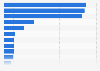
| Characteristic | Share of commercial claims spend |
|---|---|
| Total claims spend | 100% |
| Emergency care鹿 | 15% |
| Prescription spend on drugs for which no therapeutically equivalent alternative exists虏 | 12% |
| Shoppable total | 73% |
| Prescription spend on drugs with lower-cost therapeutically equivalent alternatives鲁 | 10% |
| Medical care shoppable across sites of care鈦� | 5% |
| Medical care shoppable within a site of care鈦� | 58% |
The chart is not accessible to screen readers. Please switch to the table view to access the data.
McKinsey & Company
April 2024
North America, United States
2021
1,526 respondents
2021 commercial claims data
The source adds the following:
*"For this analysis, we define "shoppable" care as non-emergency medical care for which a patient can make a choice of physician, health system, or care setting (such as facility-based or at-home care). We also consider retail pharmacy spend on drugs for which therapeutic equivalents are available."
鹿Includes all care billed alongside an ER claim, including ancillary expenses (e.g., labs and imaging) associated with an ER visit and hospital admissions originating in the ER.
虏Spend on drugs for which no therapeutically equivalent alternatives exist and, as a result, for which member-driven shopping is limited.
鲁Includes spend on drugs for which therapeutically equivalent, lower-cost drugs (e.g., generics or biosimilars) are available.
鈦碔ncludes care that members can choose to schedule across several sites of care (e.g. facility-based or at-home infusion therapy).
鈦礗ncludes spend on scheduled care for which members can shop within a given site of care (e.g., physician office visits, labor and delivery).