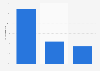
| Characteristic | I am worried about its growing regional economic influence | I welcome its growing regional economic influence |
|---|---|---|
| - | - | - |
| - | - | - |
The chart is not accessible to screen readers. Please switch to the table view to access the data.
April 2025
Asia, APAC
January 3 to February 15, 2025
2,023 respondents
among respondents from ten ASEAN member states and Timor-Leste. Respondents are professionals from the following categories: academia, think-tankers, or researchers; private sector representatives; civil society, non-government organisations (NGOs) or media representatives; government officials; and regional or international organisations personnel
CAPI interview, questionnaire
Original question: "What is your view of this economic power鈥檚 influence on your country?"
Respondents included those who previously answered "China" in response to a question about which country or regional organization is currently the most influential economic power in Southeast Asia.
ASEAN stands for Association of Southeast Asian Nations and is a political and economic union composed of the ten member states Brunei, Cambodia, Indonesia, Laos, Malaysia, Myanmar, Philippines, Singapore, Thailand, and Vietnam.
Results from respondents from Timor-Leste excluded in the aggregated averages as the country is not yet an ASEAN member state.
On their calculation methodology for ASEAN average figures, the source states the following:
We decided to apply a different methodology this year assigning a 10% weighted average to each country鈥檚 responses to calculate the average figures for ASEAN as a whole. This is to ensure that the responses of each country are represented by equal proportion, given that ASEAN鈥檚 decision-making processes are based on each country having equal say, regardless of country or population size.
Number of respondents in 2025 overall survey: n = 2,023
Respondent share by nationality:
Brunei: n = 3.9% (2024) 7.5% (2025)
Cambodia: n = 9.5% (2024) 8.5% (2025)
Indonesia: n = 13.3% (2024) 12.5% (2025)
Laos: n = 8% (2024) 7.5% (2025)
Malaysia: n = 11.3% (2024) 11.9% (2025)
Myanmar: n = 9.5% (2024) 9.6% (2025)
Philippines: n = 10.8% (2024) 10.2% (2025)
Singapore: n = 13.7% (2024) 12% (2025)
Thailand: n = 10.1% (2024) 9.7% (2025)
Vietnam: n = 10% (2024) 7.7% (2025)