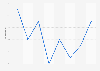
| Characteristic | Increase in energy and food prices causing economic hardship | Erosion of trust in a rules-based order and violation of national sovereignty | Worsening tensions between the US and China | Increase in existing divisions within ASEAN | Does not affect Southeast Asia |
|---|---|---|---|---|---|
| - | - | - | - | - | - |
| - | - | - | - | - | - |
| - | - | - | - | - | - |
| - | - | - | - | - | - |
| - | - | - | - | - | - |
| - | - | - | - | - | - |
| - | - | - | - | - | - |
| - | - | - | - | - | - |
| - | - | - | - | - | - |
| - | - | - | - | - | - |
The chart is not accessible to screen readers. Please switch to the table view to access the data.
April 2024
Asia, APAC
January 3 to February 28, 2024
1,994 respondents
among Southeast Asian respondents
CAPI interview, questionnaire
Original question: "What continues to be the most serious impact of the Russia-Ukraine War on Southeast Asia?"
ASEAN stands for Association of Southeast Asian Nations and is a political and economic union composed of the ten member states Brunei, Cambodia, Indonesia, Laos, Malaysia, Myanmar, Philippines, Singapore, Thailand, and Vietnam.
Respondent share by nationality:
Brunei: 9.2% (2023) 3.9% (2024)
Cambodia: 10.2% (2023) 9.5% (2024)
Indonesia: 9.3% (2023) 13.3% (2024)
Laos: 8.2% (2023) 8% (2024)
Malaysia: 9.5% (2023) 11.3% (2024)
Myanmar: 8.8% (2023) 9.5% (2024)
Philippines: 7.6% (2023) 10.8% (2024)
Singapore: 15.9% (2023) 13.7% (2024)
Thailand: 11% (2023) 10.1% (2024)
Vietnam: 10.4% (2023) 10% (2024)