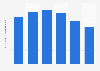
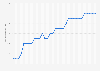
| Characteristic | Index score (0-1) |
|---|---|
| 2021 | 0.98 |
| 2020 | 0.98 |
| 2019 | 0.99 |
| 2018 | 0.97 |
| 2017 | 0.97 |
| 2016 | 0.98 |
| 2015 | 0.98 |
| 2014 | 0.98 |
| 2013 | 0.97 |
| 2012 | 0.97 |
| 2011 | 0.97 |
| 2010 | 0.97 |
The chart is not accessible to screen readers. Please switch to the table view to access the data.
Libya
2010 to 2021
Figures have been rounded and therefore may differ slightly from the original figures.
The release date is the date of access.
The Gender Development Index (GDI) is the ratio of female Human Development Index (HDI) to male HDI.
The source explains that the GDI "measures differences in male and female achievements in three basic dimensions of human development: health, education and command over economic resources. Gender disaggregated data is used in each dimension. The health dimension is captured by female and male life expectancy at birth. Education is measured using two indicators鈥攆emale and male expected years of schooling for children and female and male mean years of schooling for adults ages 25 and older. Command over economic resources is measured by female and male estimated earned income".